
We introduce a practical guide for Singapore homes that tests wet-and-dry machines on hard floors common in HDB flats and condos.
In this guide we explain what we mean by a machine that both vacuums and washes: it keeps clean and dirty tanks separate for hygiene. We focus on real spills, daily debris from kids and pets, and how easily a unit moves around tight corridors.
Who is this for? Busy households that want faster cleaning than traditional mopping, especially in humid climates where floors can feel sticky.
We set realistic expectations: one-pass vacuuming and washing cuts chore time, though basic upkeep still matters. We preview the buying criteria we’ll use — suction, tank size, brush design, battery life and maintenance — to help you shortlist efficiently.
For model context and feature examples, see curated roundups like the best wet-dry options.
Why we trust these reviews for Singapore homes</h2>
We test machines with local living in mind. Our focus is on tiles, vinyl and laminate found across HDB flats and condos. This gives practical results for small rooms and frequent rainy-day messes.
How we evaluate wet dry performance on hard floors
We check whether a unit leaves streaks or excess moisture, and whether it delivers a fast-drying finish. Tests run on multiple hard floors to mirror real use.
What we look for in pick-up of dirt and debris
We use household examples: rice, sand and hair, plus sticky spills such as coffee and sauces. Each trial rates how well the head captures debris and removes embedded dirt without repeat passes.
Practicality: weight, design and manoeuvrability
We weigh units, test handle ergonomics and measure turning circle in narrow corridors. Brush heads that reach skirting boards score higher because edges collect most grime.
- Local fit: tests reflect compact layouts and wet mess hotspots.
- Usability: we only count LCDs, voice prompts and auto-adjust systems if they genuinely save effort.
- Upkeep: we detail dirty tank emptying and brush cleaning so buyers know maintenance needs.
What a wet and dry vacuum is and who it suits</h2>
These two-in-one units handle both liquids and solids, so you can switch from spill rescue to daily sweeping without swapping tools. We define a wet dry vacuum as a device that lifts solids and extracts liquids while keeping clean and dirty reservoirs separate via a dedicated system.
When a wet dry vacuum beats a dry vacuum for everyday cleaning
We find a wet dry vacuum outperforms a dry vacuum when households need one-pass cleaning on hard floors. It cuts chore time by combining mop and suction. Families with young children and pet owners benefit most: quick response to fresh spills and tracked-in grit is simpler.
Common trade-offs: bulk, noise level and maintenance time
Expect stronger motors and better suction, but also larger bodies and higher noise. Dirty-tank handling adds a short maintenance routine after use. Dried stains may still need repeat passes or a targeted hot-mode clean, so set realistic expectations before you buy.
“A hybrid unit saves us equipment and often halves clean-up time for everyday accidents.”
- Best fit: busy Singapore homes, pet owners, families.
- Consider: floor type, household size and tolerance for after-use care.
How to choose the best wet dry vacuum cleaner in Singapore</h2>
A practical shortlist starts with capacity, suction and how long a single charge lasts under real use. We prioritise features that reduce interruptions in a typical Singapore flat and that cut overall chore time.
Tank capacity: clean water vs dirty water tank sizing
Tank size controls how often you stop. Larger clean and dirty tanks suit 3–4 room flats by reducing refills and empties. Smaller tanks fit tight storage and quick spot cleans.
Tip: match clean tank capacity to dirty tank capacity; an oversized clean tank is useless if the dirty tank fills first.
Suction power and runtime in real minutes
Suction (Pa or Air Watts) affects how well debris and spills are lifted. Higher ratings generally mean fewer passes on rice, sand and stubborn drips.
Battery and battery life matter: washing draws more power than dry mode. Check estimated minutes for wash mode rather than idle specs.
Filters, cord options and brush design
Standard filters are fine for visible dust. Choose HEPA for allergy-sensitive households.
Cordless offers room-to-room freedom; corded gives endless run time. Consider brush rollers that reach skirting lines and corners for a thorough finish.
“Prioritise tank balance, suction and realistic battery minutes to match your flat size.”
Our top water vacuum cleaner reviews picks at a glance</h2>
We highlight standout models to match common priorities: overall performance, pet hair, tight spaces and value.
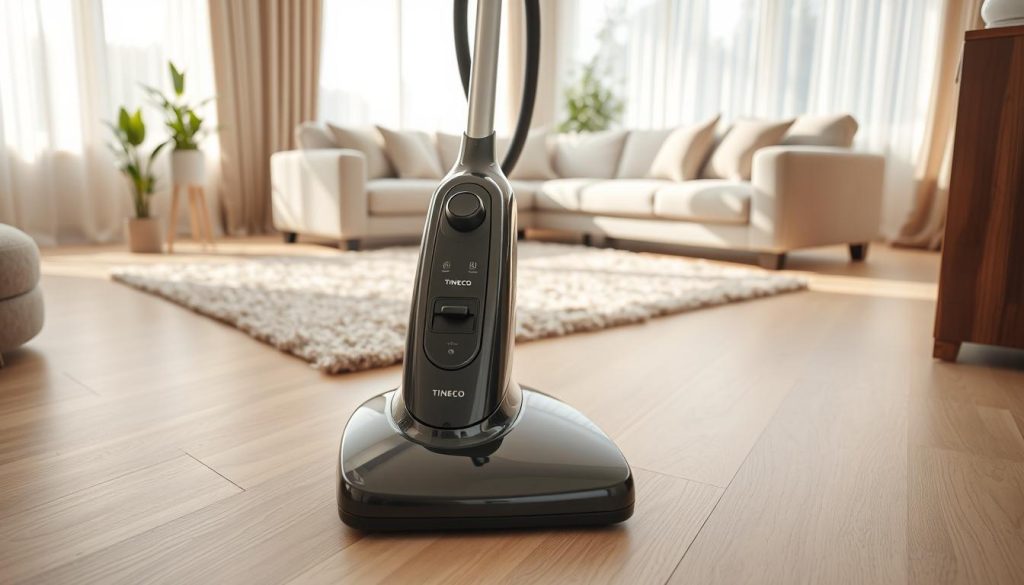
Overall best: Tineco Floor One Switch S7 Stretch
Why it wins: a balanced mix of smart sensors, strong wet dry performance and easy handling. We call this the top pick for Singapore flats that want one smart, versatile machine.
Runner-up: Tineco Floor One S7 Pro
The S7 Pro stays close behind thanks to guided usability, LCD prompts and self-propulsion. TechRadar also flags this model for hard floors.
Best for pet hair: Bissell CrossWave X7 Cordless Pet Pro
Specialised pet modes and brush design make it ideal for fur and tracked-in grit.
Best budget buy: Simplus Cordless Wet-Dry Vacuum Cleaner
Good suction and sensible features for the price; a practical entry model for tight budgets.
Most manoeuvrable: Narwal S20 Pro
Compact steering and edge reach suit furniture-dense layouts where tight turns matter.
| Pick | Strength | Best for |
|---|---|---|
| Tineco Floor One Switch S7 Stretch | Smart sensors, versatility | All-round performance |
| Tineco Floor One S7 Pro | Guided use, self-propelled | Hard floors, ease of use |
| Bissell CrossWave X7 Cordless Pet Pro | Pet-focused modes | Homes with pets |
| Simplus Cordless Wet-Dry Vacuum Cleaner | Value for money | Budget-conscious buyers |
| Narwal S20 Pro | Manoeuvrability | Small, cluttered flats |
Tineco Floor One Switch S7 Stretch review</h2>
Our hands-on checks focus on how the Tineco Floor One Switch S7 Stretch balances smart control with practical performance.
Smart iLoop sensor system: auto-adjusting suction and water flow
The iLoop sensor detects mess level and adjusts suction and water delivery automatically. This reduces overwetting and speeds cleaning on hard floors.
Dual-side brush roller and edge reach for hard floors
The dual-side brush reaches about 0.5cm from skirting lines so edge grime is picked up without extra passes. The head suits tiles and laminate commonly found in Singapore flats.
Battery and runtime: floor washer vs vacuum mode
Runtime differs by mode: up to 50 minutes in floor washer mode and up to 70 minutes in vacuum mode. Full charge takes about 4.5 hours.
The unit weighs 4.7kg and converts to a stick with attachments for spot jobs. The clean tank holds 1,000ml and the dirty tank 720ml — a sensible balance for mid-clean refills in kitchens and living areas.
“A premium, user-friendly choice if you want a single device that washes floors and converts into a stick unit.”
| Spec | Value | Practical note |
|---|---|---|
| Suction | 22,000 Pa | High suction for rice, sand and sticky spills |
| Clean tank | 1,000ml | Good for 2–3 room flats before refill |
| Dirty tank | 720ml | Monitor during heavy kitchen use |
| Runtime | 50 / 70 minutes | Washer vs vacuum mode, room-by-room coverage |
| Weight | 4.7kg | Manageable for stair carry and longer sessions |
Tineco Floor One S7 Pro review</h2>
We assess how the Tineco Floor One S7 Pro translates sensor-led modes into real-world results for Singapore flats. The unit feels like a hard-floor specialist rather than a generalist.
Cleaning modes mapped to mess level
Auto adjusts suction and fluid flow via sensors for everyday spills. It saves power and limits overwetting on tiles.
Ultra raises intensity for deep-clean and deodorising. Expect higher noise — around 65dB in tests — but better results on sticky marks.
Max is for stubborn stains; use it sparingly as it draws the most energy.
Suction-only handles dry debris or quick spill pickup without the washing cycle.
Usability: self-propulsion, LCD and voice prompts
The self-propelled head reduces push effort in long runs. The LCD and voice prompts remove guesswork when multiple family members use the unit.
We found guided prompts helpful during mode changes and mid-clean alerts.
Upkeep: dirty water tank and self-cleaning system
Emptying the dirty water tank after most sessions is necessary to prevent odour. The self-clean brush routine helps, but it does not replace rinsing the tank and checking for trapped debris.
“Strong, guided modes and a clear interface make the S7 Pro a top pick for hard-floor-focused homes.”
| Aspect | Note | Practical tip |
|---|---|---|
| Modes | Auto, Ultra, Max, Suction-only | Start Auto for routine, use Max for stains |
| Runtime / Noise | ~40 minutes / ~65dB (Ultra) | Suitable for short to mid sessions; avoid late-night Ultra use |
| Dirty water handling | Frequent emptying required | Rinse tank after each use to avoid odour |
| Usability | Self-propulsion, LCD, voice | Good for multi-user households |
Who should buy: those who prioritise guided, hard-floor washing performance and clear prompts over broader multi-room automation.
Bissell CrossWave X7 Cordless Pet Pro review</h2>
We examine how the CrossWave X7 handles fur, litter dust and muddy pawprints common in Singapore flats.
Turbo Pet mode raises suction and pairs a solution-assisted scrub to attack clumps of fur, tracked-in dirt and stubborn stains.
In practice this mode lifts fur from rugs and picks up damp paw marks without excessive smearing. It also reduces repeat passes on mixed messes.
Tank design and mid-clean realities
The clean tank holds 820ml while the dirty tank is 420ml. That split means the dirty tank fills faster during heavy pet sessions.
For a kitchen or small flat the 30-minute runtime suits spot cleaning and quick touch-ups. For larger areas you will stop more often to empty the dirty water and refill the clean tank.
Performance, upkeep and who should buy
With up to 20,000 Pa of suction and a 4.8kg weight, the unit balances power with manageable handling for stairs and tight corridors.
Maintenance is important in pet homes: empty the dirty water after each use, check the brush for hair build-up and rinse parts to prevent odour.
“Turbo Pet mode makes a real difference for fur and tracked-in dirt, but the tank split forces regular stops during heavy use.”
| Spec | Value | Practical note |
|---|---|---|
| Clean tank | 820ml | Good for multiple spot cleans before refill |
| Dirty tank | 420ml | Empty more often during pet-heavy sessions |
| Suction | Up to 20,000 Pa | Strong pick-up for fur and small debris |
| Runtime / Charge | 30 minutes / 4 hours | Best for smaller flats or quick cleans |
| Weight | 4.8kg | Portable but sturdy for regular use |
Simplus Cordless Wet-Dry Vacuum Cleaner review</h2>
For buyers watching their budget, the Simplus offers a straightforward mix of suction and runtime that suits small Singapore flats.
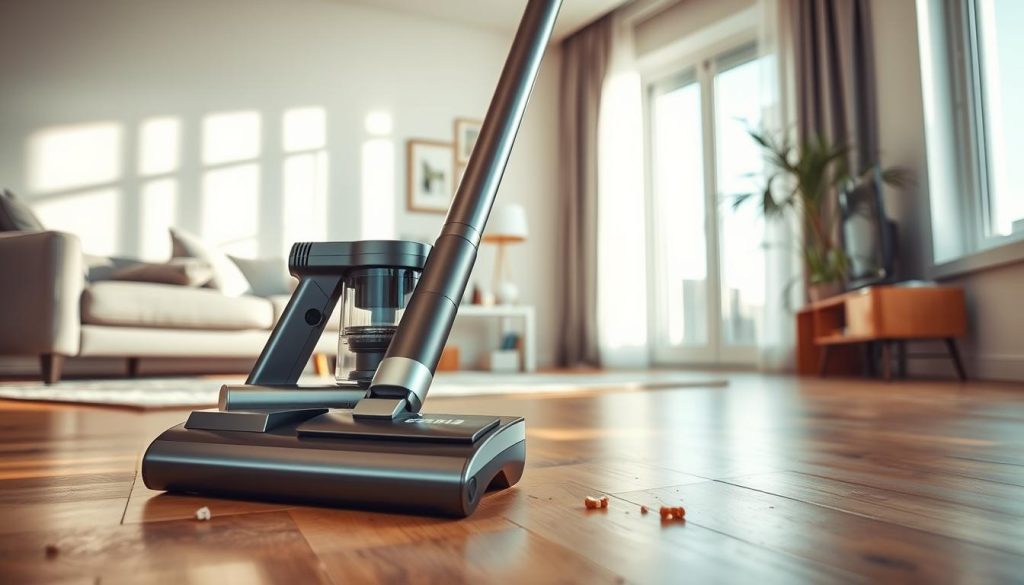
Strong suction and battery life for the price
We rate the Simplus as a strong value pick. Its 21,000 Pa suction gives usable pick-up of crumbs, grit and light spills on tiles and laminate.
This level of power typically means fewer repeat passes for everyday messes. The unit weighs 4.4kg, so it feels manageable for stairs and short carries.
The runtime is about 50 minutes on a full charge, with a 4.5-hour charge time. That battery life covers routine weekly cleans of a 2–3 room flat if you plan sessions room by room.
Flat-folding design and brush head width for tight spaces
The 180° flat-folding design is a standout for reaching under sofas, beds and narrow furniture clusters. It makes access to low gaps much easier in compact layouts.
One trade-off is the 6.5cm brush head. It reaches into tighter gaps and near corners, but in large open areas you may need more passes to cover the same floor area.
- Tank sizes: 500ml clean / 550ml dirty — practical for kitchens and small flats, but expect to empty after heavy use.
- Value position: strong performance for the price without premium smart features.
- Practical plan: use cordless mode for spot work and schedule longer runs to match the 50-minute runtime.
“A sensible, budget-friendly option for first-time users and households needing a secondary unit for kitchen and dining zones.”
Narwal S20 Pro review</h2>
The Narwal S20 Pro blends smart sensing with compact handling for busy Singapore living rooms. We focused on how its AI-led behaviour and reach perform in furniture-dense layouts.
AI Dirt Sense and multiple cleaning modes
AI Dirt Sense automatically raises or lowers intensity as you move between dusty and cleaner zones. That helps balance performance and runtime, so we used higher power only where needed.
There are five selectable modes. Use a gentle setting for daily cleaning and a stronger wet dry mode for post-cooking mess. The single targeted suction burst clears clingy spots without constant manual changes.
Triple-sided edge cleaning and flat-fold reach under furniture
The triple-sided head pulls grime from skirting and into the path so edges and corners look finished. The flat-fold design slips under sofas and beds, reducing the need to move furniture in small flats.
Charging time vs runtime for larger floor areas
Spec highlights: 790ml clean water tank and 720ml dirty tank, 20,000 Pa, 4.27kg weight, and up to 60 minutes runtime.
Charging takes about 3.5 hours. For whole-flat sessions we found this tank balance reduces stops for refills and emptying, but heavy cleaning with trapped dirt or wet mess may still need short breaks.
“Smart sensing and edge focus make the S20 Pro a practical pick for tight Singapore homes.”
Hot water cleaning options: Dreame H15 Pro Heat review</h2>
For kitchens with greasy pans and stubborn spills, a heat-assisted mopping option changes the cleaning game. We assess the Dreame H15 Pro Heat as a specialised model for degreasing and stuck-on grime in busy Singapore kitchens.
Hot water mopping at 85°C for oil spills and stuck-on grime
The H15 Pro Heat delivers hot water at 85°C. In practice this loosens oily residue faster and cuts down repeat scrubbing. We found hot water breaks down grime so the head lifts more in one pass.
Triple edge cleaning, suction power and weight considerations
The unit pairs 22,000 Pa suction with triple-edge reach to pull loosened mess into the dirty tank rather than spreading it. Flat-folding and auto-traction wheels aid manoeuvre, but note the 6kg weight—hefty for daily carry.
When hot water mode’s shorter runtime is still worth it
Normal runtime is up to 70 minutes; hot water mode lasts about 25 minutes. That shorter span suits targeted degreasing in kitchens, not whole-flat runs. Also check floor compatibility: high heat and wet intensity may be harsh on some timber, so test a small area first.
Dyson wet and dry vacuums in Singapore: what you’re paying for</h2>
Dyson’s Submarine line blends cordless convenience with premium filtration aimed at users who prioritise hygiene and lightness. We look at why prices sit above mid-range options and which trade-offs matter in a Singapore flat.
Dyson V12s Origin Submarine: lightweight design and everyday versatility
Key points: 130 Air Watts, 2.2kg, ~60 minutes runtime and 3.5h charge. The small 300ml clean / 360ml dirty tanks suit quick, frequent touch-ups rather than long wet sessions.
Dyson V12s Detect Slim Submarine: HEPA filtration and Fluffy Optic head
The Detect Slim adds HEPA filtration and a Fluffy Optic head to reveal fine dust on hard floors. It uses 140 Air Watts and keeps the same 60 minutes and tank split, so it’s ideal where dust and hygiene are priorities.
Dyson Digital Slim Submarine: compact build with reduced runtime
The Digital Slim trades some runtime for a slimmer frame. Expect around 40 minutes, easier storage and the familiar Dyson build quality—useful if you favour a compact form over longer runs.
| Model | Air Watts | Weight | Runtime |
|---|---|---|---|
| V12s Origin | 130 | 2.2kg | 60 minutes |
| V12s Detect Slim | 140 | 3.1kg | 60 minutes |
| Digital Slim | — | lighter | ~40 minutes |
“You pay a premium for sustained R&D, high-grade filtration and refined heads that expose and lift fine dust.”
In short, choose Dyson if you value strong build, targeted suction and hygiene features. If you need long continuous runs across multiple rooms, weigh tank size and battery minutes against the premium price.
Maintenance and running costs: keeping your vacuum cleaner performing</h2>
A short bit of after-use attention saves you time, money and elbow grease later on.
After each use we empty the dirty water tank straight away. Rinse the tank and any channels that carried fluid so residue does not harden overnight.
After-each-use routine
Emptying the dirty water is the first step. Then flush the system and leave lids open to air-dry. This reduces smell and stops mould in humid Singapore conditions.
Brush roller care
Many models include a self-clean cycle. We use that for light debris but always remove the brush or roller weekly to clear hair and sludge.
Dry the parts fully before reassembly. Damp rollers breed odour fast, so allow plenty of drying time and keep parts ventilated when stored.
Storage and battery tips
Store the system in a cool, ventilated spot to prevent mould. For battery life, avoid prolonged deep discharge and follow manufacturer storage advice.
“Regular upkeep keeps suction steady, prevents streaking and extends part life.”
| Task | Why it matters | How often |
|---|---|---|
| Empty dirty water tank | Prevents odour and bacterial growth | After each use |
| Rinse channels & tank | Keeps seals and pump working | After each use |
| Remove & dry brush/roller | Stops hair build-up and smells | Weekly or after heavy pet use |
| Battery care | Preserves battery life and runtime | Follow charge cycles; avoid long storage discharge |
Where to buy in Singapore and how to compare price fairly</h2>
Finding the right place to buy in Singapore starts with knowing which sellers include genuine accessories and reliable after-sales support.
We usually recommend authorised retailers and major marketplaces for higher-priced items. Authorised stores protect your warranty and make after-sales servicing simpler.
Checking inclusions: attachments, solution and warranty coverage
Always confirm what is in the box. Look for extra rollers, spare filters, cleaning solution and whether the dock offers self-clean or drying.
Tip: a listed warranty with local service is worth a modest premium if you plan heavy use.
Deal-hunting without regrets: compare specs not discounts
Compare by tank capacity, suction/power numbers, runtime and weight. These specs predict real performance for your job better than a sale tag.
- Match models by tank, runtime and weight for like-for-like comparison.
- Confirm which features you will actually use — edge cleaning or auto-adjust sensors — before paying extra.
- Check docking footprint and storage fit in your service yard or cupboard.
| Check | Why it matters | Action |
|---|---|---|
| Inclusions | Spare parts save cost | Verify list on product page |
| Warranty | Local repairs easier | Buy authorised seller |
| Specs | Predicts daily use | Compare tank, power, runtime, weight |
“Base your choice on how the model fits the job you need done — daily spills, pet messes or whole-flat cleans.”
Conclusion</h2>
To finish, we offer a simple checklist to turn these specs into a sensible purchase. A wet dry unit that combines suction and rinsing can halve chore time on hard floors and tackle both liquid and solid debris in fewer passes.
Who suits which pick: premium all-rounders for frequent cleans, pet-focused models for fur and muddy paw dirt, and budget options for basic grit and light spills.
Decide on suction power, battery minutes that match your flat size, and whether the head is optimised for hard floors. Remember that wet cleaning creates dirty water and needs post-clean hygiene, so choose a design you will maintain.
Next steps: shortlist two or three models, compare how they handle water and dry pick-up, and buy from a seller with clear warranty support. For tips on tricky spill care, see learn how to clean paint off.

