
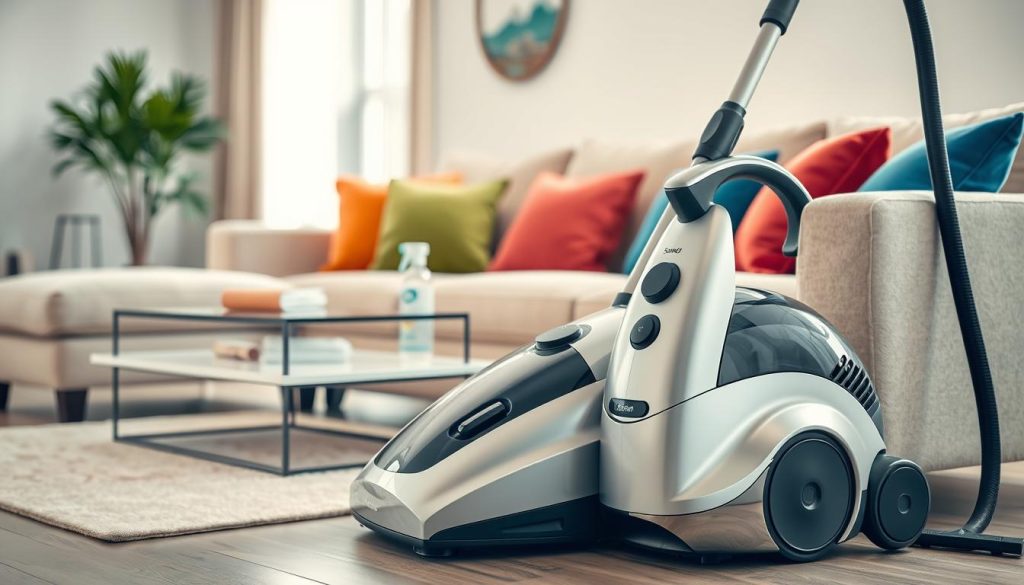
We introduce why a combined washer‑and‑suction unit can change routine cleaning at home.
In tropical climates where hard floors and humidity meet frequent spillages, a single machine that handles liquids and solids saves time. We name models such as Tineco Floor One Switch S7 Stretch, Bissell CrossWave X7 Cordless Pet Pro, Simplus Cordless Wet‑Dry Vacuum Cleaner, Narwal S20 Pro and Dreame H15 Pro Heat to show real options.
Our testing covers tank capacity, suction strength, battery life, selectable modes and ease of maintenance. This explains how we judge value beyond headline price and which trade‑offs a buyer might accept.
We also clarify terms so you do not buy the wrong tool: a wet‑dry floor washer cleans with water, while a vacuum‑with‑mop head brushes without hot‑water washing. Our aim is clear — to help you combine vacuuming and washing in one pass.
Why we recommend a wet and dry vacuum cleaner for Singapore homes
Spills, tracked grit and pet hair make a strong case for a single tool that deals with liquids and solids at once.
Everyday spills, pet hair, and high-traffic hard floors
We see common mess profiles daily: pet fur, tracked-in grit, fine dust and sticky footprints after meals.
In kitchens and dining areas, quick removal of water and dirt prevents stains and odour. A one-pass wash plus suction clears debris and leaves floors ready to use.
How one-pass cleaning cuts chore time
A combined pass reduces overall time versus running a dry vacuum first and then mopping the whole area.
That saves minutes after dinner or when kids spill drinks. For tile, vinyl and laminate, this approach is especially effective on hard floors while avoiding repeated trips with two machines.
- Quick after-meal touch-ups without tool switching.
- Efficient pickup of dust, crumbs and small liquid spills.
- We still recommend a dedicated dry vacuum for sofas, deep carpet and tight corners.
| Typical mess | Single-pass result | When to use a dry tool |
|---|---|---|
| Spills (water, juice) | Removed and extracted | Not required |
| Pet hair and crumbs | Picked up in one go | Optional for sofas |
| Fine dust and grit | Captured and rinsed | Use dry for deep carpets |
What a wet and dry vacuum is and how it works
We define a wet dry vacuum as a machine built to pick up solid debris and to wash liquid messes into separate reservoirs. A typical unit feeds clean water from a water tank onto a rotating brush, then uses suction to lift the loosened slurry into a dirty water tank.
How clean water, brush rolls, suction and tanks cooperate
The process is simple: the clean water tank supplies water or a mild detergent to the brush roll. The brush agitates sticky residues and fine dust, while suction pulls the mix away.
The used liquid collects in the dirty water tank for easy emptying. Good designs separate the two tanks and offer wide openings for rinsing to avoid odour build-up.
What floor washer models can and cannot do on rugs
Floor washer models shine on sealed hard floors but rarely replace deep carpet shampooing. Some machines freshen low-pile rugs without soaking them, while others are limited to bare floor areas.
“Look for clear tank markings, removable brush rolls and a simple rinse routine to keep performance consistent.”
| Task | Typical result | When to use a dry vacuum |
|---|---|---|
| Spills and sticky marks | Removed and extracted | Not required |
| Fine dust and crumbs | Captured by brush and suction | Optional for carpets |
| Deep carpet stains | Not fully removed | Use carpet shampooing |
Trade-offs to know before you buy
We want buyers to balance convenience with real-world costs. A combined floor washer and suction unit brings more functions, but that comes with trade-offs in size, noise and ongoing care.
Why these units are heavier, bulkier and louder
The extra plumbing, dual tanks and a stronger motor add weight. A larger cleaning head is common because it must carry a water tank and a dirty water reservoir.
More power usually means louder operation. That affects flats where late-night cleaning could disturb neighbours.
Maintenance reality check: tanks, brush cleaning and odour control
Dirty water must be emptied and rinsed after each run. Leaving used liquid overnight invites smells in humid climates.
Brush rolls trap hair and sludge. Even with a self-clean cycle, we still perform occasional manual cleaning and drying to prevent odour.
- Expect regular emptying of the dirty water tank and quick rinses of the water tank.
- Dry brushes and rollers thoroughly before storage to stop mildew.
- Self-clean is handy but not a replacement for manual care.
“Routine care keeps performance steady — small chores now avoid big problems later.”
Best wet and dry vacuum cleaner Singapore: what we look out for
A useful unit balances tank size, suction and runtime so a single pass covers real rooms. We judge features by real use: how many minutes a run lasts, whether tanks are simple to rinse, and if suction lifts rice, hair and crumbs without smearing.
Tank capacity and water tank design for clean and dirty water
Capacity matters. A clean water tank of roughly 800–1,000ml and a dirty water tank that holds most of that volume avoids mid-clean refills.
Good tank design means clear fill lines, easy removal and tight seals for hygienic emptying.
Suction and real-world pickup for debris, dust, and wet messes
Spec numbers are useful, but we test how suction performs on rice grains, pet fur and puddles. Look for consistent power under load — 20,000–22,000 Pa class in tests keeps performance steady.
Battery life, runtime, and charge time for full-home sessions
Runtime in minutes and charge hours shape cleaning plans. We prefer setups that offer 50–70 minutes for general cleaning or 25–30 minutes at turbo for spot work.
Cleaning modes that matter
Relevant cleaning modes include auto mode that adjusts power, a max/turbo for stubborn marks, suction-only for spills, and edge cleaning for skirting lines.
Filter system choices and air quality
HEPA filters make sense for allergy-prone homes; good seals reduce airborne dust and improve indoor air quality after a run.
Noise and manoeuvrability
We note noise in flats; smoother rollers and better sealing lower harsh tones. Cordless designs with agile wheels and a low-profile head win under-furniture access.
Accessories and multi-surface versatility
Useful extras include a hand tool for upholstery, a crevice nozzle and an option to switch to a stick mode for dry tasks. For more on practical upkeep and usage, see our guide to apartment carpet care at cleaning apartment carpets with a combined.
“We prioritise designs that reduce fuss: clear tanks, reliable suction and long runtimes give the best daily experience.”
Our quick shortlist of top-rated models for different needs
We offer a rapid decision guide that pairs a model with typical chores — pets, grease, tight spaces or budgets. Below is a compact shortlist to match your priorities at glance.

Overall all‑rounder for most hard floors
Tineco Floor One Switch S7 Stretch: a flexible model with smart sensors and solid suction. It balances runtime, tank design and ease of use for everyday hard floors.
For pet hair and everyday fur
Bissell CrossWave X7 Cordless Pet Pro: anti‑tangle features, strong pickup and pet modes make this a pragmatic pick for homes with shedding animals.
Budget pick for value‑led buyers
Simplus Cordless: lower price, decent power and fair runtime. Expect simpler features and slightly more hands‑on maintenance in return for the price.
Most manoeuvrable option for tight layouts
Narwal S20 Pro: compact head and agile steering help in narrow walkways and under low furniture. Good for flats where access matters more than large tanks.
Hot water cleaning option for grease and stubborn stains
Dreame H15 Pro Heat: uses hot water up to 85°C to tackle kitchen grease and set stains. This model adds heat where cold rollers often struggle.
“Match a model to your main problem — pet hair, limited space, tight price or tough stains — and you shorten cleaning time.”
Tineco Floor One Switch S7 Stretch: our overall best pick for smart auto cleaning
The Tineco Floor One Switch S7 Stretch pairs smart sensing with a flexible format to simplify weekly floor care. Its combination of automation and a convertible system makes routine work quicker for most homes.
Smart iLoop sensor tech and LCD guidance
iLoop sensors adjust suction and water flow in real time. The LCD shows when the floor still needs attention and when it is clean.
Edge reach with a dual-side brush roller
The dual-side brush gets within about 0.5cm of skirting lines. That close reach helps lift hair and dust from corners without repeated passes.
Runtime, modes and practical planning
Specs give up to 50 minutes in floor-wash mode and up to 70 minutes in stick mode. Expect shorter runtime when max power is used.
Use auto mode for daily upkeep, max for stubborn marks, and suction-only for quick spills to save water and minutes of charge time.
Switchable system for dry tasks
The unit converts to a stick system with attachments. This is useful for rugs, sofas and quick crumb pickup without a separate appliance.
- Water tank: 1,000ml clean; dirty water 720ml — plan refills for larger flats.
- Suction: 22,000 Pa; weight 4.7kg; charge about 4.5 hours.
- Rinse rollers and empty tanks after use to avoid odour in humid homes.
“Clear feedback and near-wall reach make the Switch S7 Stretch a low-fuss solution for everyday floors.”
Bissell CrossWave X7 Cordless Pet Pro: best for pet hair and stubborn messes
Tackling fur, crumbs and sudden messes needs a cordless unit with focused modes and reliable suction. We position the CrossWave X7 Cordless Pet Pro for homes with frequent shedding, tracked-in dirt and the odd spill that must be fixed fast.
Turbo Pet mode and stain tackling on hard floors and rugs
Turbo Pet mode gives extra punch for stubborn marks and concentrated pet fur. Use it for high-traffic areas on hard floors and for careful passes on low-pile rugs to avoid over-wetting.
We recommend short, targeted passes when treating set stains to reduce residue and improve lift.
Tank sizing and what it means for frequent refills
The clean water tank holds 820ml while the dirty water tank is 420ml. That means fewer top-ups of clean water, but more frequent emptying of the dirty tank during long sessions.
With suction up to 20,000 Pa and a maximum runtime of 30 minutes (charge about 4 hours), the unit suits medium flats and zone cleaning. For large homes you will likely pause to empty and recharge.
“For pet homes, choose a tool that balances power with quick maintenance — it keeps floors cleaner with less fuss.”
- Handles hair, crumbs and light grit well.
- Keep the brush clean to avoid smearing.
- Ideal for short, regular cleaning bursts rather than deep carpet work.
Simplus Cordless Wet-Dry Vacuum Cleaner: our best budget wet dry choice
Value choices succeed when they get the fundamentals right: power, tank layout and usable runtime. The Simplus Cordless presents strong suction on paper and a practical battery life for modest homes.
Strong suction for the price and practical battery life
At 21,000 Pa and 4.4kg weight, the unit packs notable power for its price band.
We record a maximum runtime of 50 minutes and a charge time of about 4.5 hours — enough for zone cleaning in many flats.
Flat‑folding design and brush head width for edges and corners
The 180° flat‑folding design helps reach under low furniture.
A slim 6.5cm brush head improves edge contact for skirtings and tight corners.
Where it fits best: smaller flats, quicker cleans, lighter maintenance expectations
Clean water holds 500ml while the dirty water tank is 550ml, so expect refills on larger jobs but fewer immediate stops to empty waste.
Budget here means fewer sensors and refinements, not poor fundamentals.
“Simple, powerful performance makes this a practical entry point for first‑time users.”
- Who it suits: small flats, quick touch‑ups, first‑time buyers.
- Trade‑off: smaller clean tank requires planning for larger floor areas.
- Maintenance: rinse tanks and dry parts after each run to avoid odour.
| Spec | Value | Impact for home use |
|---|---|---|
| Suction | 21,000 Pa | Strong pickup for crumbs and light spills |
| Clean / Dirty tank | 500ml / 550ml | Good waste capacity; refill clean tank for larger rooms |
| Runtime / Charge | 50 minutes / 4.5 hours | Suits zone cleaning; plan for recharges on full flats |
| Design / Head | 180° fold, 6.5cm brush head | Access under furniture and along edges |
Narwal S20 Pro: most manoeuvrable for under-furniture and edge cleaning
We favour the Narwal S20 Pro when reach and nimble movement matter most. Its flat‑folding design and light 4.27kg weight let the head slip under low cabinets and coffee tables with little effort.
Triple-sided edge cleaning and flat-folding reach
Triple-sided edge cleaning captures dust lines beside skirtings, fridges and cabinets. The slim head and rolling wheels keep contact close to edges so fewer passes are needed.
AI Dirt Sense and multi-mode control for changing debris levels
AI Dirt Sense raises power when it senses heavier dirt and eases off on already-clean patches. Multiple modes give control over suction and water flow so we can balance thoroughness with battery life.
Hot water support and what it’s good for
Hot water support is useful for greasy spots in kitchens or set marks by the stove. It is a targeted feature, not required for every room.
“Good manoeuvrability plus smart sensing reduces time spent on repeat passes.”
- Specs: 790ml clean water tank, 720ml dirty water tank, 20,000 Pa suction.
- Up to 60 minutes runtime; charge about 3.5 hours.
- Who should shortlist it: homes needing reach, edge performance and smarter modes without premium cost.
Dreame H15 Pro Heat: best hot water mopping for oil spills and tougher stains
We recommend the Dreame H15 Pro Heat when kitchen grease and set stains are the main issue. Its 85°C hot water function loosens oil films that cold rollers struggle to shift.
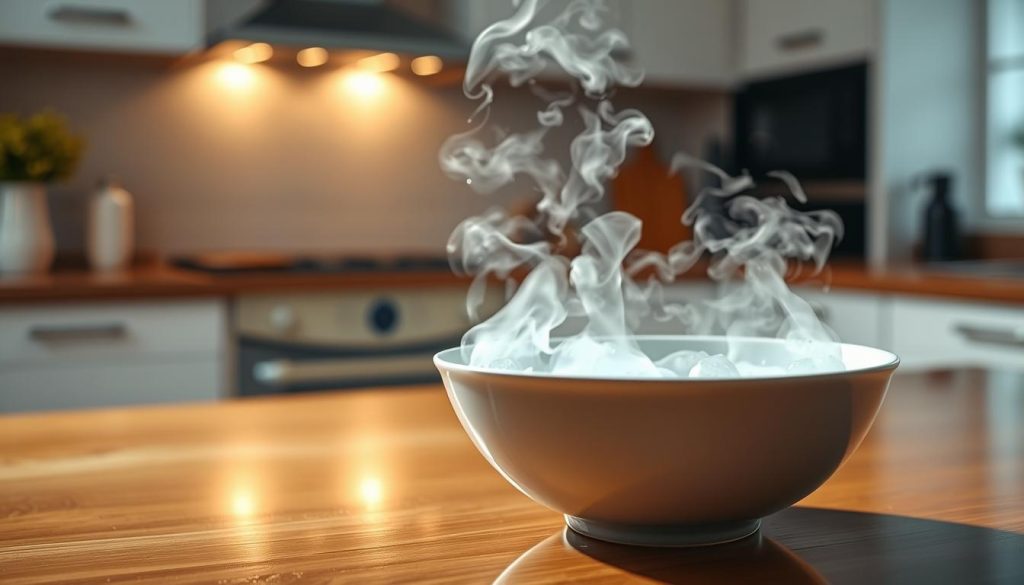
85°C hot water mopping and continuous brush wetting for grime
The unit heats water to 85°C and keeps the brush continuously damp. This thermal action softens sticky residues while the brush agitiates and lifts grime from tile grout and around stoves.
Power and runtime: normal mode versus hot water mode
Specs: 22,000 Pa suction, an 800ml clean water tank and a 650ml dirty water tank. In normal mode we record up to 70 minutes runtime. In hot water mode the runtime falls to about 25 minutes. Charge time is roughly 4 hours.
| Feature | Value | Practical note |
|---|---|---|
| Suction | 22,000 Pa | Strong pickup for debris and wet mess |
| Clean / dirty tank | 800ml / 650ml | Good balance for spot kitchen work |
| Runtime (normal / hot) | 70 minutes / 25 minutes | Use heat for targeted stains, not whole-house cleans |
| Charge time / weight | 4 hours / 6kg | Traction wheels ease handling but lifting needs care |
Weight and floor compatibility, including care on wooden floors
The 6kg design uses auto-traction wheels and a flat-folding layout to aid manoeuvre. That reduces effort when steering across tiles and lino.
Be cautious on soft-sealed timber floors. High heat and aggressive brush action can be too harsh. We advise using a low-power mode and testing a small area first.
“Heat is a powerful ally for kitchen stains, but match the mode to the surface to avoid damage.”
- Who should consider it: homes with greasy kitchens and frequent oil stains.
- Trade-off: higher price and heavier design in exchange for heat-driven stain lift.
- Tip: reserve hot-water mode for hotspots and use normal mode for routine runs.
Shark HydroVac WD210SM: value-friendly wet-dry cleaning with antimicrobial rollers
We see the HydroVac WD210SM as a pragmatic choice for regular upkeep where brand trust matters without a premium price tag.
Cleaning modes for different surfaces and day-to-day practicality
The unit offers several sensible modes to match common tasks: a quick maintenance mode for light messes, a spill mode for dining accidents and a standard floor mode for weekly refreshes.
Why this matters: the right mode saves water and battery while avoiding over-wetting on sealed timber or vinyl.
- Quick passes for crumbs and dust without heavy use of the water tank.
- Spot mode for greasy or sticky marks in kitchens.
- Standard mode for routine cleaning across hard floors.
Brush roller hygiene and odour reduction considerations
The HydroVac uses antimicrobial brush rollers to limit bacterial build-up and reduce smells when stored in compact cupboards.
Practical note: antimicrobial material helps, but regular maintenance remains essential. Empty the dirty water tank, rinse the water tank and dry the brush after use.
The small dirty water capacity (360ml) means we often pause to empty during larger sessions. With a 500ml clean water tank, 2,700 Pa suction, 30 minutes runtime and a weight of 3.9kg, the unit suits light-to-medium jobs in flats.
“Antimicrobial rollers are a helpful hygiene feature, not a substitute for basic care.”
| Spec | Value | Practical impact |
|---|---|---|
| Clean water tank | 500ml | Good for short rooms; refill for larger areas |
| Dirty water tank | 360ml | Frequent emptying on longer jobs |
| Suction | 2,700 Pa | Adequate for crumbs, dust and light debris |
| Runtime / Charge | 30 min / 4 hrs | Zone cleaning; recharge between longer sessions |
Who should consider it: households seeking a branded, cordless option for everyday cleaning at a modest price. For heavy-duty deep cleans or very large homes, a larger tank and stronger suction are preferable.
Dyson wet and dry vacuum options in Singapore: what we’d buy and why
We see Dyson’s Submarine line as a hybrid approach: a high-performance dry vacuum that can accept a wet head for targeted floor washing rather than a full‑size floor washer system. That difference shapes who benefits most from this range.
Models to know
Dyson V12s Origin Submarine — 300ml clean tank, 360ml dirty water, 130 Air Watts, 2.2kg, up to 60 minutes, 3.5h charge. Light handling suits quick, regular cleaning.
Dyson V12s Detect Slim Submarine — same tanks, 140 Air Watts, 3.1kg, HEPA filter and Fluffy Optic head for visible dust and better filtration; up to 60 minutes runtime.
Dyson Digital Slim Submarine — the lightest, slimmest option with reduced runtime (~40 minutes). Choose it when weight and manoeuvrability matter most.
Why Dyson typically costs more
Dyson’s price reflects heavy investment in R&D, cyclonic suction engineering, advanced filtration and industrial design. We consider the result to be a quiet, efficient air flow system that keeps dust and allergens sealed away.
“You are often buying an excellent dry vacuum first, with a wet head for hard floors, rather than a floor‑washer format.”
How to choose between them
Compare tank size, suction measured in Air Watts, weight and runtime. Smaller water tanks mean targeted spot washing rather than whole‑home sessions. Higher Air Watts signal stronger dry performance for carpets, rugs and upholstery.
Who should choose Dyson
We recommend Dyson for mixed‑floor homes that want superior dry cleaning plus occasional wet work. It suits buyers who value light handling, strong suction for dust and carpets, and premium design. If you need long continuous floor washing or large water capacity, a dedicated floor washer is a better match.
How we’d choose the right model for your home layout and floors
Choosing the right machine depends more on floor mix and daily routines than on headline specs. We assess rooms, family habits, storage limits, plus how often you clean.
Mostly hard floors versus mixed flooring with rugs
For homes with mostly hard floors we favour a dedicated floor washer for one-pass cleaning. These models deliver consistent water flow, larger tank capacity and broad heads that cut time.
For mixed layouts with rugs we prioritise a strong dry vacuum that keeps carpets fresh. Convertible systems that switch between mopping mode and dry mode give flexibility without owning two machines.
Homes with kids and pets: hair, stains, and fast clean-ups
Kids and pets raise different needs: rapid response, anti-tangle brush designs, plus stain performance matter more than raw tank size.
We recommend models with quick emptying, easy brush access, and short charge-to-runtime cycles so you can tackle spills in minutes.
Small flats versus larger homes: capacity, battery, and storage space
Small flats often need compact storage and short docking footprints. Consider a model that stands upright, has a slim head, and a modest water tank that still covers typical rooms.
Larger homes demand greater capacity or longer battery life. Choose bigger tanks, extended runtime minutes, or accept periodic refills and recharges for uninterrupted cleaning.
- Decision rule: pick a floor washer for mainly hard floors; choose a powerful dry vacuum for lots of rugs.
- Value lens: pay more for heat, better sensors, or convertible systems if you need targeted stain removal; budget models suit light, frequent upkeep.
- Mode advice: use auto modes for daily runs; select turbo for stains; suction-only for spills to save battery life.
“Match a model to your layout, not to the slickest spec sheet.”
Owning costs and upkeep we plan for (so performance stays consistent)
A clear upkeep plan keeps performance steady long after the first few cleanings. Regular care reduces surprises, preserves suction power and saves money on replacements. Below we set out a simple routine and note what auto cycles cannot fully manage.
Emptying dirty water and rinsing tanks after each use
Empty the dirty water tank every run. Rinse both tanks with clean water and wipe seals to stop smells and residue.
Doing this takes only a few minutes but prevents odour and bacterial build-up in humid climates.
Self-clean systems versus manual cleaning: what still needs doing
Self-clean cycles rinse rollers and pathways. They reduce effort but do not remove hair wrap or trapped debris completely.
We still remove the brush to clear hair, check the filter for dust and run a manual rinse when needed.
Brush, filter, and drying routines to prevent smells and build-up
Dry brush rolls and open the tanks after cleaning. Air-drying is a non-negotiable step in our routine to avoid mildew.
Ownership costs include replacement rollers, filters and occasional cleaning solution. Budget time for brief upkeep after each session to keep system features and cleaning power consistent.
“Small, regular care keeps suction steady and extends component life.”
Conclusion
We judge a product by whether it becomes part of your weekly routine. Choose a wet dry option when hard floors dominate and a convertible vacuum setup for mixed layouts.
Quick summary: our picks match needs — a smart all‑rounder for general care, a pet‑focused model for fur, a budget unit for tight price limits, a manoeuvrable head for small flats, and a hot‑water option for kitchen stains.
Prioritise real factors that affect daily satisfaction: reliable suction, sensible tank sizes, usable battery minutes and low‑effort upkeep. Compare models on those points, not only specs.
Final tip: weigh price against long‑term time saved. Pick the product you will use each week and it will repay the investment.

