We answer the question straight away: standard upright, stick and robot models are not made for liquid pick-up and trying that risks electric shock, permanent damage and mould growth in your home.
By “clean water” in a household setting we mean standing puddles from a spill, leak drips and damp patches. The correct approach depends on the amount and the floor type. Small damp marks may be handled by a robot with a mopping function, but standing puddles need sealed systems.
In humid Singapore, moisture left behind turns into odour and mould faster than many expect. Safe handling means choosing a wet vacuum or a wet dry vacuum with sealed components and special filters, not a regular unit.
In the sections ahead we will cover risks of dry machines, what is safe at home, proper wet/dry technique and how to pick the right device for spills and everyday maintenance.
Why a regular vacuum cleaner shouldn’t be used for water cleaning
Standard dry units are electrical devices built for dust, not liquids. Their motors and wiring lack waterproof insulation. Bringing liquids near exposed circuits raises the risk of short circuits, sparks and electric shock.
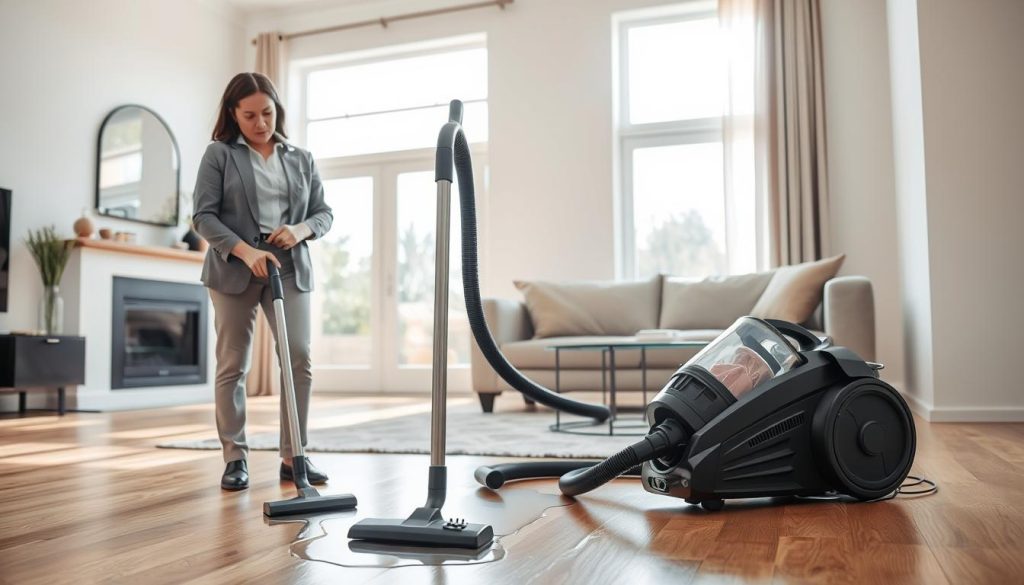
Electric shock and short‑circuit hazards
Moisture inside a unit can bridge contacts and cause immediate failure. That is a safety issue, not merely an inconvenience.
Permanent motor and wiring damage
When damp reaches the motor or circuit boards it causes corrosion. That leads to irreversible system damage and early replacement costs.
Filters, bag sludge and reduced suction
Liquid mixes with dust and dirt in a bag or bin, forming sludge that clogs filters and hoses.
Clogs cut suction power and often spread debris rather than remove it, leaving residue and increasing slip risk.
Mould, mildew and odours in humid homes
Trapped moisture in components encourages mould and mildew growth, especially in Singapore’s climate.
That creates persistent smells and can recirculate particles into indoor air, worsening allergies.
Warranty, misuse and time costs
Many manufacturers classify liquid pick‑up with standard models as “misuse” and exclude it from warranty cover.
“Even if the unit seems fine initially, internal dampness often leads to later breakdowns.”
Trying to save time by suctioning a spill may cost far more in filter replacements, repairs and odour removal.
- Check your manual and, if needed, consult a dedicated wet‑dry vacuum guide before attempting liquid pick‑up.
Can we use vacuum cleaner to clean water safely at home in Singapore?
Standing liquid on floors in our climate often becomes a bigger problem within hours. For quick decisions, match volume and surface before acting.
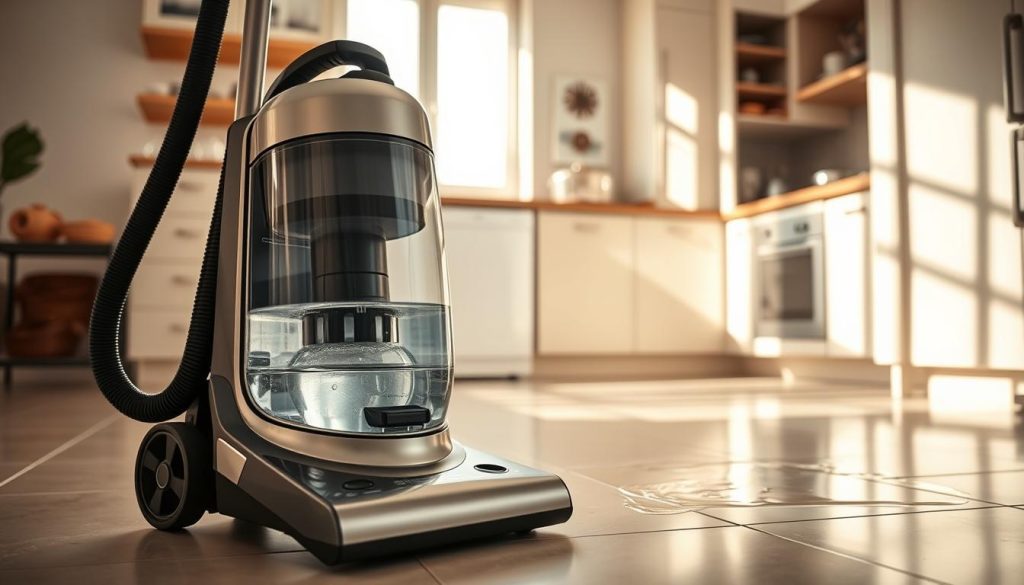
When a wet dry vacuum is the right tool for spills, leaks and small floods
Choose a wet dry vacuum for standing pools, burst pipes near balconies, and damp carpet patches. These units have sealed tanks, insulated motors and special filters that let them suck water safely and fast.
They are ideal for small floods and sink leaks but have limited capacity. Expect empty-and-repeat cycles during larger events.
When we should mop instead on hard floors
Mopping is often safer on delicate laminate or timber-look surfaces. It avoids heavy, bulky machines near sockets and narrow areas.
Mopping is also faster and more cost-effective for light spills on tile and vinyl.
What robot cleaners with mopping can and can’t do with water stains
Robot models with a mopping function handle damp patches and moderate stains well. They do not handle standing pools and should not be relied upon for large spills.
For practical guidance and model advice, consult this wet and dry guide.
How to use wet dry vacuums to suck water without damaging the system
A careful pre-check and methodical approach protect seals, the motor and filter elements.
Confirm liquid rating and prepare the unit
Make sure the model has sealed housing, a dedicated collection tank and water‑resistant filters. Remove any dry bag and fit the foam or wet‑use filter that the manufacturer specifies.
Switching modes and attachments
Fit a wide squeegee nozzle for tile and vinyl. Use gentle heads on laminate to avoid swelling. For carpet, fit an extraction tool and avoid aggressive scrubbing.
Technique for spills and managing suction
Work from the outer edge toward the centre in short, controlled passes. Keep suction steady and stop if debris clogs the airway or suction drops—this protects the motor and maintains suction power.
Tank, float shut‑off and emptying
Watch the tank level and listen for a change in motor sound; many units use a float shut‑off to prevent overfill. Empty wastewater into a suitable drain, remove solids first, then rinse the tank and hose.
Post‑clean care and safety checks
Rinse filters, air‑dry components fully and store the unit with lids open in a dry spot to avoid mould and corrosion in Singapore’s climate. Stop immediately if you smell burning, hear odd noises or notice sudden suction loss and power down for inspection.
“Proper changeover and post‑care are the best safeguards against long‑term damage.”
Choosing the right wet vacuum for liquids, dust and everyday cleaning
Not every model suits mixed duties; pick one that fits the layout and typical messes of your home.
Wet vacuum vs wet/dry: core features that matter
Wet vacuum units focus on liquids and fast extraction. They have sealed tanks and foam filters for moist pickup.
Wet dry models accept both liquids and dry debris when fittings are swapped. Expect removable bags, a foam filter and tool changes for dust or dirt.
| Feature |
Wet vacuum |
Wet dry |
| Best for |
Liquid spills, moisture extraction |
Mixed messes: liquids and dry debris |
| Filtration |
Foam / washable filter |
Bag + foam or HEPA option |
| Mobility |
Light to mid weight |
Often bulky; heavier when full |
| Maintenance |
Rinse tank, air dry parts |
Switch filters, empty solids, rinse |
Practical drawbacks and best-fit uses
Wet dry machines perform well for kitchen spills and carpet moisture after a drink. They are less ideal where storage or lifting is limited.
Avoidance guidance: do not attempt pick-up of hazardous liquids. Dispose of wastewater correctly and change filters between dust and liquid tasks to reduce damage and odour.
For tips on extended uses and creative tasks with a wet dry, see this wet and dry guide.
Conclusion
, For everyday spills at home, choosing the right tool prevents costly faults and hazards. Standard domestic machines should not pick up standing pools due to shock, clogs, mould and permanent damage.
Pick the right option: reserve sealed wet/dry models for pools and extraction. Prefer mopping on hard surfaces and rely on robot mopping for damp stains rather than large accumulations.
Decide by spill volume, floor surface, proximity to sockets and how fast the area can dry. After any liquid pickup, rinse and dry the tank, hose and filters so odour and corrosion do not follow.
Check manuals and warranty terms before wet operation so our routine stays safe, compliant and cost‑effective in the long run.
FAQ
Can we use vacuum cleaner to clean water? Our Guide
We recommend using equipment specifically designed for liquids. Standard dry models lack sealed motors and suitable filters, which risks electrical faults, motor corrosion and trapped moisture that leads to odours. For routine spills, a wet/dry unit or a purpose-built wet vacuum provides safer suction, a liquid tank and filters meant for fluids.
Why a regular vacuum cleaner shouldn’t be used for water cleaning — electric shock and short-circuit risks when using dry vacuums on liquids
Dry-only appliances do not have insulation or float switches for liquids. Bringing water into contact with live electrical parts can cause short circuits, trip residual-current devices or, in the worst case, create an electric shock hazard. We always isolate power and choose tools rated for wet use.
Why a regular vacuum cleaner shouldn’t be used for water cleaning — permanent motor and wiring damage from moisture inside vacuum cleaners
Moisture can corrode windings and degrade insulation, reducing motor lifespan or causing failure. Even after drying, residues and mineral deposits remain and impair performance. We avoid exposing dry units to damp conditions to protect internal components.
Why a regular vacuum cleaner shouldn’t be used for water cleaning — filters, bag sludge and clogs that reduce suction power and spread debris
Water mixes with dust and debris to form sludge that blocks bags, filters and airways. This lowers suction and can force contaminated droplets back into rooms. Wet-capable machines use washable filters and open tanks to prevent clogging and maintain airflow.
Why a regular vacuum cleaner shouldn’t be used for water cleaning — mould, mildew and odours in humid Singapore homes if moisture is trapped
Trapped moisture creates an ideal environment for mould and mildew, causing musty odours and potential health issues in humid climates. Wet-rated units allow proper draining and thorough drying, helping us avoid long-term microbial growth.
Why a regular vacuum cleaner shouldn’t be used for water cleaning — warranty and “misuse” issues to check before attempting to suck water
Manufacturers often void warranties if a product is used outside its specifications. We advise checking the user manual and warranty terms; if the unit is not rated for liquids, attempting water removal may cancel cover and incur repair costs.
Can we use vacuum cleaner to clean water safely at home in Singapore? — When a wet dry vacuum is the right tool for spills, leaks and small floods
A wet/dry model handles sudden spills, blocked drains and minor flooding. Look for sealed components, a float shut-off and sufficient tank capacity. These features let us remove liquid quickly while safeguarding the motor and electrical system.
Can we use vacuum cleaner to clean water safely at home in Singapore? — When we should mop instead on hard floors to avoid damage and hazards
For light spills on tile, vinyl or laminate, mopping and controlled wringing often suffices and reduces electrical risk. We choose mops for thin layers of liquid and reserve wet extraction for larger volumes or contaminated water.
Can we use vacuum cleaner to clean water safely at home in Singapore? — What robot vacuum cleaners with mopping can and can’t do with water stains
Robotic mops work well for light stains and routine maintenance. They are not designed for standing water or heavy soiling. We should not expect robot systems to replace a wet/dry unit for substantial spills or water extraction from carpets.
How to use wet dry vacuums to suck water without damaging the system — confirming the vacuum is built for liquids: sealed components, wet-use filters and tank design
Check the specification plate and manual for wet operation, IP ratings or explicit wet/dry labelling. Wet-capable units have washable or foam filters, a robust tank and sealed motor housings. We only proceed if these features are present.
How to use wet dry vacuums to suck water without damaging the system — switching from dry to wet mode: removing the dry bag and fitting the correct filter
Before contact with liquids, remove any paper bags and install the wet-use filter or foam sleeve supplied. Using a dry bag or wrong filter risks saturation and blockage. We follow the manufacturer’s switch-over steps precisely.
How to use wet dry vacuums to suck water without damaging the system — choosing the right nozzle and attachments for surfaces like tile, vinyl, laminate and carpet
Use a wide floor head for hard surfaces and a squeegee-style or carpet attachment for soft floors to extract moisture effectively. We select accessories that match the surface to avoid scratching and to improve suction efficiency.
How to use wet dry vacuums to suck water without damaging the system — best technique for water spills: working the outer edge in, managing suction and debris
Start at the perimeter and draw liquid toward the central area, handling solids first where possible. Keep the nozzle flat and move slowly to let the machine pick up fluid. We avoid lifting the head abruptly to maintain seal and suction.
How to use wet dry vacuums to suck water without damaging the system — tank capacity and float shut-off: recognising when the liquid tank is full
Monitor the clear tank or gauge and stop when the float activates. Continuing beyond this point risks motor ingestion of liquid. We plan emptying intervals based on spill size and the unit’s capacity.
How to use wet dry vacuums to suck water without damaging the system — emptying and disposal: handling wastewater cleanly and safely
Drain wastewater into a sink or drain in accordance with local rules, avoiding contamination of garden areas. For hazardous or greasy liquids, follow waste disposal guidance. We wear gloves and rinse the tank after emptying.
How to use wet dry vacuums to suck water without damaging the system — post-clean care: rinsing hoses, drying filters and preventing corrosion and smells
Rinse hoses and tanks with clean water, wash or replace filters and allow all parts to dry thoroughly before storage. Using a mild disinfectant prevents odours. We store the unit in a dry place to reduce corrosion risk.
Choosing the right wet vacuum for liquids, dust and everyday cleaning — wet vacuum vs wet/dry vacuum cleaner: features that matter for water and dry debris
Compare tank volume, suction power, filter types, accessory range and portability. True wet-rated machines handle both fluids and debris, while versatile wet/dry models balance performance for mixed workloads. We prioritise models with washable filters and robust motors.
Choosing the right wet vacuum for liquids, dust and everyday cleaning — practical drawbacks to plan for: bulky size, weight and switching filters
Wet-capable units are often heavier and require filter changes between jobs. They may need more storage space. We factor these trade-offs when selecting a model for home or light commercial use.
Choosing the right wet vacuum for liquids, dust and everyday cleaning — use-case fit: quick spill response, carpet moisture, and larger water volumes over time
For occasional small spills, a compact wet/dry unit suffices. For frequent water issues or large volumes, choose a higher-capacity machine with strong airflow and a reliable float shut-off. We match the product to our typical incidents and storage ability.


