

We present a concise guide for readers in Singapore who want a single machine to handle spills and everyday messes. Our aim is practical: show which units work best on hard floors and recover quickly from accidents in HDB flats and condos.
In this roundup we test real use, not lab numbers. We compare tanks, suction, weight, runtime, charge time and hygiene features. Then we translate those specs into what they mean for typical homes.
Our choices include top non‑Electrolux brands such as Tineco, Bissell, Simplus and Narwal. We also set aside a section for Electrolux models, pricing, instalments and promotions available in Singapore.
What you will learn: when a wet dry design is faster than a robot, the upkeep it needs and which features cut odour and residue. We want you to buy with confidence.
Why we recommend a wet and dry vacuum for Singapore homes right now</h2>
Singapore homes need tools that handle sudden spillages and tracked‑in grit without fuss. Our view is practical: a single unit that picks up debris and water cuts the steps between mopping and sweeping. This is especially useful on tiled and sealed surfaces where quick resets keep floors looking presentable.
Everyday spills, humidity, and quick floor resets on hard floors
Humidity amplifies sticky residues and makes dirt cling to surfaces. When water meets grit, wiping alone can spread the mess. Picking up spills and rinsing in one pass saves time and reduces streaks.
Why families with children and pets benefit most
Children and pets create frequent, small messes. Crumbs, liquid spills and pet hair demand repeated attention. An all‑in‑one device lets us handle these tasks without fetching a mop bucket.
- Trade-offs: these models can be heavier and louder due to stronger motors.
- If we clean several small wet and dry messes each week, the convenience usually outweighs storage concerns.
| Use case | Benefit | Consideration |
|---|---|---|
| Kitchen spills | Single pass water pick-up limits spread | Requires tank emptying |
| Living room resets | Removes crumbs and hair in one go | Bulkier to store than a stick unit |
| High‑traffic corridors | Quick wash restores clean feel | Higher noise when running |
For step-by-step carpet care and more tips on routine maintenance, see our guide on cleaning with a combined system.
What a wet and dry vacuum cleaner is and what it can clean</h2>
We want to explain, in plain terms, what a combined wet/dry unit does around the home and outdoors.
Definition: A wet dry vacuum is one machine that picks up liquid spills and solid debris without swapping tools. This makes it practical for quick kitchen accidents and sandy entries.
Wet spills, dry messes, and debris across indoor and outdoor areas
Typical tasks include fine dust, gritty dirt, food crumbs, tracked-in sand and small puddles. Capacity and design affect comfort during larger jobs. For balconies, car mats or a light workshop clean, the unit handles both indoor and outdoor debris with ease.
How wet-and-dry designs differ from standard dry vacuums
Key differences are separate tanks, robust seals and filters that keep suction stable after liquid pickup. These systems treat water and solids deliberately to reduce odour and residue.
- Choose a stick-style if daily floor washing matters.
- Choose a drum-style for heavy-duty water pick-up and blowing tasks.
System thinking: suction, tanks, filters and brush design work together, so we judge performance by overall systems, not a single spec.
Wet and dry vacuum vs regular vacuum vs robot vacuum</h2>
For many households the choice comes down to how fast we need a spill gone and how little effort we want.
Quick overview: we compare three common setups in Singapore homes by time-to-clean and hassle. The three are an all-in-one upright, a regular dry unit and a robot vacuum.
When an all-in-one is faster than a robot
Immediate response wins. Fresh spills, sticky patches and wet footprints need direct control. A single pass that picks up liquid and debris saves precious minutes before guests arrive.
Where a dedicated dry model still makes sense
Deep carpet work, upholstery and higher-pile rugs benefit from a focused dry vacuum. For light daily dusting, a robot keeps floors presentable while we focus on other tasks.
- Robots suit routine maintenance but struggle with wet spots and tight edges.
- An all-in-one is bulkier but gives instant, hands-on results for emergencies.
- Best practical pairing: robot for daily crumbs; all-in-one for weekly resets and spills.
Design and key features — tanks, brush heads and self-clean cycles determine whether an all-in-one delights or demands too much upkeep. Choose models that balance ease of use with the tasks you face most.
What we look for when testing an upright wet and dry vacuum cleaner</h2>
We measure real-world outcomes: how quickly a unit clears liquid patches, lifts grit and leaves no residue. Our tests aim to translate specs into everyday use in HDB flats and condos.
Suction and motor performance
We judge suction by results, not claimed watts. That means a model must pick up heavier debris without repeat passes and avoid leaving damp streaks.
Tank capacity and water handling
We check both tanks: one for clean water, one for dirty water. Larger tanks increase coverage but mean fewer stops to empty.
Filter system and hygiene
Filters matter for air quality. We test microfilter setups and whether a HEPA-grade option traps fine dust and allergens after wet pickup.
Noise, weight and manoeuvrability
Noise and weight affect use in narrow corridors and small storerooms. We carry units upstairs and time typical jobs in minutes to judge practicality.
Cordless versus corded expectations
For cordless models we record runtime in minutes, charge time and how boost modes shorten use. For corded units we note reach and uninterrupted power.
Brushes, accessories and ownership costs
We assess brush design for edges and thresholds, plus included tools for corners. Finally, we track the real upkeep time to rinse tanks, dry parts and avoid odour.
“Our emphasis is on systems: suction, tanks, filters and brush design must work together for reliable cleaning.”
Electrolux wet and dry systems explained: drum vs stick designs</h2>
Electrolux divides its line into two clear systems so we can match capacity to routine.
Drum formats target heavy-duty clean-ups. These corded models offer larger tanks, strong power and a blower function for renovation dust or balcony work. The 360° handling helps when we manoeuvre around tools and plant pots.
Drum models: built for large jobs
We recommend drum types for garages, workshops and big clear-outs. Their larger tanks cut down on emptying stops, so we finish faster when debris levels are high.
Stick models: daily vacuuming and mopping on hard floors
Stick formats are cordless and compact. They combine quick vacuuming with mopping for fast floor resets in kitchens and living areas. Select sticks include a TriAction nozzle and smart dirt detection to adjust suction automatically.
Electrolux design highlights that matter at home
Key features include self-clean cycles, microfilter technology and antibacterial water tanks. These reduce maintenance time and help keep air quality steady after wet pick-ups.
- Match to use: choose drum for occasional large messes; choose stick for daily touch-ups and mopping on hard floors.
- Outcome: better edge-to-edge cleaning and fewer passes when nozzle design and sensors work together.
Our top upright wet and dry vacuum cleaner picks in Singapore</h2>
These models earned top marks for consistent suction, sensible tanks and user-friendly features in typical Singapore homes. We tested runtime, power, manoeuvrability and how each product copes with pet hair and common messes.
Best overall smart cleaner: Tineco Floor One Switch S7 Stretch
Why we like it: iLoop sensing adjusts suction to mess level. The model offers 1,000ml clean water and 720ml dirty tanks, 22,000 Pa suction and up to 50 minutes as a floor washer or 70 minutes in vacuum mode. It converts to a stick for dry-only jobs.
Who it’s for: households that want smart sensing, long runtime and low fuss between wet and dry tasks.
Best for pet hair: Bissell CrossWave X7 Cordless Pet Pro
Why we like it: Turbo Pet mode lifts hair and tackles stains. Tanks are split 820ml clean / 420ml dirty and the model delivers up to 30 minutes per charge with strong suction for pet messes.
Who it’s for: pet owners who need targeted hair pickup and stain control in short, frequent sessions.
Best budget buy: Simplus Cordless Wet-Dry Vacuum Cleaner
Why we like it: A value product with 21,000 Pa suction, 500ml clean / 550ml dirty tanks and up to 50 minutes runtime. Its 180° flat-folding design helps reach under sofas in compact flats.
Who it’s for: cost-conscious shoppers who want reliable power and easy storage without premium bells.
Most manoeuvrable handling: Narwal S20 Pro
Why we like it: Triple-sided edge cleaning, AI Dirt Sense and hot-water mopping improve edge lift and stubborn stain removal. Tanks are 790ml clean / 720ml dirty, with around 60 minutes runtime and five cleaning modes.
Who it’s for: those who prioritise manoeuvrability, edge work and longer continuous cleaning.
“We prioritise real-use performance: runtime, tanks and consistent suction matter more than headline specs.”
Best Electrolux upright wet and dry options for different needs</h2>
We map Electrolux’s line-up to common household priorities so you can choose by use rather than specs alone.
Electrolux 800 3-in-1 EFW81713 — premium cordless convenience
Why choose it: a cordless 3-in-1 with an inverter motor and a detachable hand unit for quick pick-ups. The TriAction nozzle claims 99% debris pick-up, which makes it best for hard floors and daily resets.
Smart dirt detection and a self-cleaning system cut wasted water and over-cleaning. This product suits buyers who prioritise cordless freedom and simple operation.
UltimateHome 700 EFW71711 — hygiene and low upkeep
Why choose it: antibacterial water tanks with a claimed 99.9% bacteria reduction, plus a self-cleaning nozzle. It speeds drying after a wet pick-up and lowers maintenance time.
Flexio Power Z823 — value-focused power and versatility
Why choose it: a 3-in-1 option with 1600W power, on-board tools and 360° manoeuvrability. It is ideal if we also need blower tasks for balconies, cars or renovation dust.
| Model | Key feature | Best for |
|---|---|---|
| EFW81713 | Cordless, TriAction nozzle, self-cleaning | Premium cordless cleaning |
| EFW71711 | Antibacterial tanks, quick dry nozzle | Hygienic, low maintenance |
| Z823 | 1600W, 3-in-1 (wet dry blow), onboard storage | Value and versatility |
Price guide: Electrolux models in Singapore range from entry level to premium depending on promos. Choose the model that matches how often we need wet pickup, not just the top spec.
Self-cleaning system and maintenance: what actually saves time</h2>
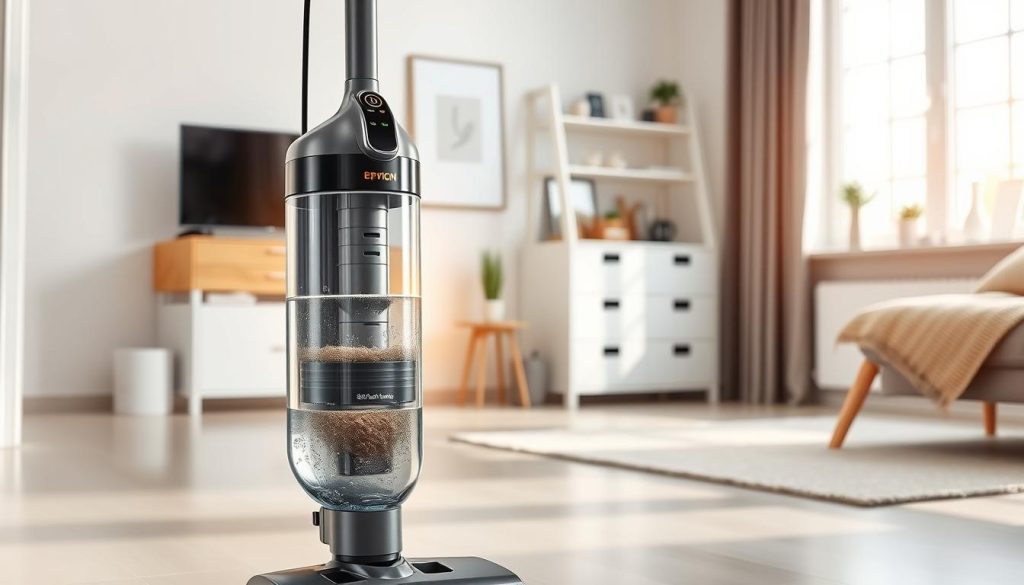
The right upkeep keeps suction and performance stable. In humid Singapore, sensible care matters as much as features. A self-cleaning system helps, but routine maintenance is what prevents odour and performance drop.
What nozzle cycles do — and don’t
Self-cleaning cycles typically flush residue through the nozzle and roller pathway. They reduce the common “wet mop smell” and rinse surface grime from the brush area.
They do not remove heavy hair tangles, thick grime or blockages inside narrow hoses. For those, we still need manual untangling and a deeper clean.
Antibacterial tanks and odour control
Antibacterial water tanks cut microbial growth and help limit odour. Electrolux claims 99.9% bacteria reduction in some models, which eases upkeep in warm, humid flats.
Empty dirty water immediately after use, then rinse. Leaving water in tanks invites smells and stains over days.
Filters, tanks and basic maintenance routine
Clogged filters and soiled tanks reduce suction power, raise noise and leave streaks even with a strong motor.
- After each use: empty dirty water, rinse with clean water and air dry.
- Weekly: check the filter, remove trapped dust and rinse per manufacturer guidance.
- Monthly: deep clean tanks and brush, untangle hair and inspect seals.
| Feature | What it does | When to do it |
|---|---|---|
| Self-cleaning cycle | Flushes roller path, reduces surface residue | After wet use or daily for heavy traffic |
| Antibacterial water tanks | Limits bacteria and odour in stored water | Rinse after each use; deep clean monthly |
| Filter and hose check | Prevents suction loss from dust and dirt buildup | Check weekly; replace per manual |
“A self-cleaning feature shortens chores, but simple drying and rinsing keep the machine working at full power.”
Cleaning performance on hard floors, rugs, and tricky edges</h2>
We judge each unit by how it treats mixed surfaces — from sealed tiles to low‑pile rugs. Our tests focus on visible results: removed debris, even water distribution and minimal streaking on shiny surfaces.
Hard floors: tiles, marble, and sealed surfaces
What good looks like: all visible debris is lifted in one pass and water spreads evenly without streaks. For marble‑like tiles, that means no cloudy marks after drying.
Tip: use the gentle wash mode and avoid over‑wetting. That reduces stains and shortens drying time.
Rugs and mixed surfaces: what to expect
Many combined systems manage low rugs lightly, removing surface dirt and crumbs. Deep pile often resists full extraction, so we recommend a dedicated dry unit for heavy rugs.
Control saturation on mixed surfaces to prevent backing wet marks. Keep the brush free of trapped grit so it does not redeposit dirt onto fibres.
Edge cleaning and corner reach
Edges reveal whether a design succeeds in real homes. We measured performance near skirting boards and under cabinets.
- Tineco’s dual‑side brush roller cleans close to walls and reduces repeat passes.
- Narwal’s triple‑side edge system picks up corner debris more reliably.
- Look for low profile heads and flexible necks to reach around table legs.
| Surface | Good result | Recommended feature |
|---|---|---|
| Sealed tiles / marble | No streaks; visible debris removed | Even water distribution, gentle wash mode |
| Low‑pile rugs | Surface dirt and crumbs lifted | Adjustable suction; brush control |
| Corners and skirtings | Debris cleared without extra passes | Dual‑side or triple‑edge roller design |
“Edge performance often defines real usability; the right brush design saves time and reduces repeat cleaning.”
Handling wet spills, stains, and drying time in real homes</h2>
A quick pass that separates clean water from dirty water makes post‑spill work far less stressful. We focus on how systems perform in kitchens and bathrooms, where fast pick‑up and safe floors matter most.
Kitchen and bathroom spills: clean water, dirty water, and fast pick‑up
Most models keep a reservoir of clean water and a separate tank for waste. This isolation prevents reusing dirty water during mopping and speeds up cleaning.
Why it helps: faster pick‑up reduces tracked moisture and lowers slip risk on the floor.
Stubborn messes and stains: when hot‑water mopping helps
Hot‑water mopping, as found on the Narwal S20 Pro, lifts oily stains faster than cold water alone. Use a targeted mode for sticky residue to avoid over‑wetting.
Quick drying features for safer, less slippery floors
Suction, correct water flow and short, overlapping passes cut drying time by several minutes. Electrolux models with quick‑dry nozzles speed this process further.
- Tip: avoid long passes that add excess water.
- Clean rollers after use to prevent residue build‑up.
- Use a spot tool for bathroom grout or hair clogs.
| Feature | Benefit | Typical gain (minutes) |
|---|---|---|
| Separate tanks | Hygiene; no cross‑contamination | 1–3 |
| Hot‑water mopping | Better stain lift | 2–5 |
| Strong suction with controlled flow | Faster drying; fewer streaks | 2–4 |
“Fast pick‑up and smart water control make floors usable again in minutes.”
Choosing the right cleaning solution and water approach</h2>
How we treat water and which cleaning solution we add determines finish, odour and upkeep. In many combined systems you may use plain water or a compatible branded cleaning solution. The right choice depends on the messes we face and how much follow-up maintenance we will do.
When to use a branded cleaning solution vs plain water
Match the mix to the job
Use plain water for light dust, crumbs and quick touch-ups. It minimises residue in tanks and keeps drying fast.
Choose a branded cleaning solution for greasy kitchen film or stubborn stains. Manufacturers recommend specific formulas to control foam, limit residue and protect seals inside the system.
Avoiding build-up in tanks, brush rollers and on floors
Rinse tanks after every use and run a short plain-water cycle through the brush path weekly. This reduces odour and stops sticky films from forming on rollers.
- Use the recommended dilution — stronger mixes can dull sealed or laminate floor finishes.
- Inspect the brush for trapped gunk and remove it during routine maintenance.
- When in doubt, favour a milder solution we will actually use regularly over an aggressive mix we avoid.
“Balanced cleaning power, paired with simple rinse habits, keeps performance high and upkeep low.”
Price guide in Singapore and what value looks like</h2>
We map typical Singapore prices to the features that truly matter so you can buy with confidence.
Electrolux pricing band: models generally range from entry level to premium, with promotions sometimes cutting the price significantly. The lower end covers basic corded units; the upper band includes premium cordless designs with smart sensors and advanced hygiene features.

What typically drives the price difference
Cost rises when a product adds cordless freedom, smarter sensing, antibacterial tanks or more robust seals. Added power, longer runtime and extra tools also push the sticker price up.
How we judge true value
We look past price to runtime in minutes, tank sizes, charge time and the set of included tools. A higher price can be worthwhile if the system saves time, reduces repeat passes, or replaces other cleaning tools we own.
| Tier | What you get | Who it suits |
|---|---|---|
| Entry | Basic corded models; simpler filters; fewer tools | Occasional use; tight budgets |
| Mid-range | Cordless options; better runtime (20–50 minutes); larger tanks | Daily users; small families |
| Premium | Premium cordless; smart sensors; antibacterial tanks; bundled tools | Frequent use; pets; larger flats |
“A cheaper product may cost more over time if parts are hard to dry, upkeep is tedious, or edge cleaning forces repeat passes.”
Decision checklist:
- Smaller flat: favour compact cordless models with solid runtime in minutes and useful tools.
- Pets: choose larger tanks and better brush design to reduce repeat work.
- Daily cooking: antibacterial tanks and easier maintenance pay off.
- Occasional heavy jobs: a corded, high‑power product with simple servicing may be best value.
Where to buy in Singapore and how to compare deals</h2>
When shopping in Singapore we weigh support, delivery and long‑term costs alongside the headline price.
Official brand stores give clear warranty support and authentic parts. Marketplaces often offer aggressive pricing and frequent vouchers. We check both but favour authorised sellers when warranty and servicing matter.
Official brand stores vs marketplaces: delivery, instalment plans, and promotions
Official stores can include free delivery, 0% interest instalment plans and exclusive promotions. Electrolux Singapore, for example, runs periodic discounts up to 47% on select models.
Marketplaces may undercut the price, but confirm the exact model number and the list of included accessories or tools before checkout.
What to check before checkout: warranty, returns, and bundled accessories
Before we buy, we verify warranty length, return windows and whether the seller is authorised. Confirm whether consumables or extra rollers are bundled with the product.
Watch for hidden ownership costs: replacement filters, extra brush heads and branded cleaning solution refills add to long‑term maintenance.
| Where to buy | Key advantage | What to verify |
|---|---|---|
| Official store | Warranty, service, instalments | Model number, included accessories, authorised seller |
| Marketplace | Lower upfront price, vouchers | Seller rating, return policy, authenticity |
| Special promo | Big discounts or bundles | Total bundle value, aftercare support, expected maintenance spend |
“List the total bundle value, add expected maintenance spend and rate support quality to see true value.”
Conclusion</h2>
We wrap up with a practical view: choose a model that fits the spills, grit and weekly habits of your home. The right wet dry vacuum matches your mess profile, stays simple to maintain and actually gets used.
Key takeaways: smart all‑rounders suit frequent cleaning; pet‑focused models handle hair; budget options work if expectations are modest; manoeuvrable designs matter in smaller flats. Water handling, separate tanks and sensible solution use matter as much as suction for reliable results.
Remember: a self-cleaning system helps, but you must still rinse and dry parts to avoid odour and loss of performance. Robots are great for upkeep, yet a hands‑on unit remains the faster tool for immediate spills.
Shortlist 2–3 models, check included tools and local warranty, then pick the one that feels easiest to use each week. For Electrolux options and local deals, see the Electrolux wet and dry range.

