
We introduce what sofa cleaning shampoo is and when to use it. Our aim is clear: a practical, repeatable process we can use at home in Singapore that cuts guesswork and improves comfort.
We explain what “sparkling” means beyond looks. It includes reducing built-up dirt and daily contaminants so the seat feels and smells fresher.
In this guide we show how we assess fabric, mix the solution, and dry effectively in local humidity. We also flag when a professional cleaning service or steam option is the safer route for delicate or stubborn cases.
Readers will learn step-by-step methods, product choices and equipment tips based on real needs rather than marketing. For deeper material-specific advice, see our linked primer on couch care at how to clean by material.
Why we use sofa cleaning shampoo for a healthier home in Singapore
We examine the unseen load that builds in fabrics and how it affects comfort and air quality.
What builds up in upholstery over time
Upholstery acts like a filter. It traps dirt, dust, bacteria and dust mites deep in the fibres where a surface wipe cannot reach.
In Singapore’s warm, humid climate this build-up happens faster. Fabrics can take on stale odours and harbour microbes that irritate sensitive family members.
When a quick refresh isn’t enough
We choose a deep clean when a surface tidy-up fails to fix real problems. Key signs include persistent odours, visible stains, dulled colour and a tacky feel from residue.
Recurring sneezing or skin irritation after sitting are strong signs that mites and bacteria remain. Steam is excellent for allergen removal, while shampooing gives faster spot removal. Both need test spots and regular maintenance to avoid harm.
How often to deep clean
High-traffic homes with pets or young children need deeper work more often. Regular vacuuming stretches the time between sessions and improves overall removal.
| Issue | Signs | Recommended action |
|---|---|---|
| Dust & dirt | Greying fabric, surface grit | Vacuum weekly; deep clean quarterly |
| Dust mites & mites | Allergy symptoms, sneezing | Steam or professional deep cleaning |
| Bacteria | Lingering odour, sticky residue | Targeted shampooing and sanitising |
Know your sofa fabric before we start
We always check the care label and identify the material before any treatment. This tells us whether the manufacturer allows water, solvents or only dry methods. It helps us avoid irreversible damage.
Reading care tags and a discreet test spot
We perform a small test on a hidden area. We check for discolouration, dye transfer, watermarking or stiffness once the spot dries.
Fabric types that need extra care
Delicate weaves, blended backings and some upholstery linings react badly to excess water or agitation. For those types we favour controlled spot work or professional help.
Why pH and product choice matter
pH affects dyes and finishes. Overly alkaline or acidic solutions can fade colours or break down fibres. We select products rated for the specific fabric type and follow label guidance.
| Material | Care code | Risk with water | Our action |
|---|---|---|---|
| Natural fibres (cotton, linen) | W or S | May shrink or fade | Test spot; controlled water cleaning |
| Synthetic weaves (polyester, microfibre) | W | Generally tolerant | Use balanced solution; avoid over-wetting |
| Delicate/backed fabrics | X or Dry Clean | Backing damage, delamination | Avoid heavy shampooing; professional clean |
Our sofa cleaning shampoo method, step by step
Our approach balances effective stain removal with fast drying suited to Singapore’s humidity. We work in small stages so fabric is treated carefully and the final look is even.
Vacuuming first to lift dust and loose debris
We begin with thorough vacuuming, including seams, piping and under cushions. This removes loose dust and grit so moisture won’t turn soil into muddy marks.
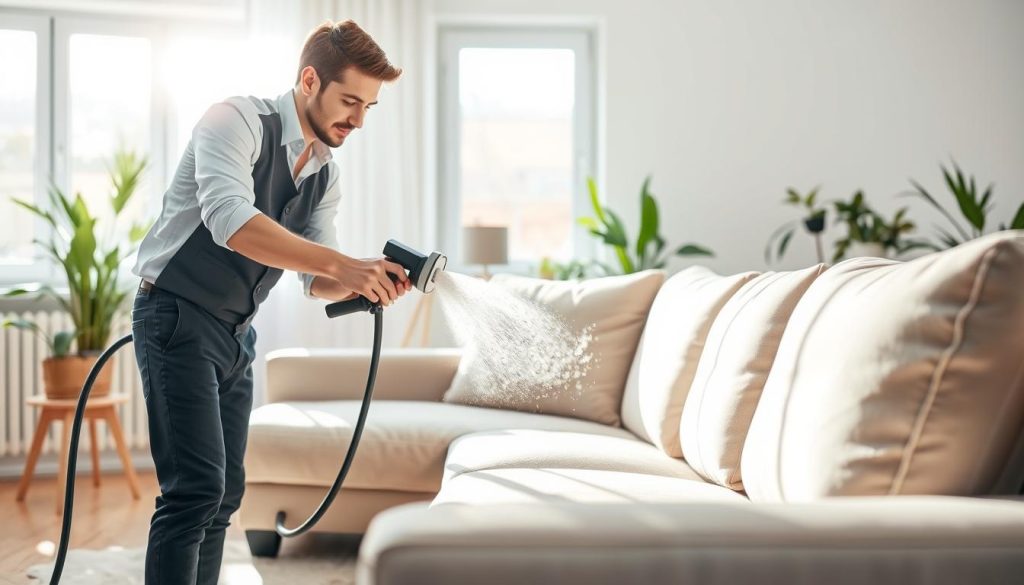
Mixing the solution correctly to avoid residue
We measure dilution carefully. Too strong a mix leaves sticky residue; too weak reduces the process’s effectiveness.
Use the manufacturer’s ratio and test a hidden area to check for colourfastness.
Working the foam into the fabric without over-wetting
We generate a frothy lather and work it in with gentle, consistent strokes. This method uses minimal water to protect backings and cut drying time.
Avoid aggressive brushing that can fuzz fibres or distort the weave.
Extracting and wiping away shampoo for a truly clean finish
We remove residue by extraction or repeated blotting with clean cloths until no suds transfer. Proper removal prevents re-soiling.
Finished fabric feels even, not tacky, and shows no patchy dark areas.
Drying the right way in Singapore’s humidity: ventilation, fans and timing
Drying is critical. We maximise ventilation, use fans and plan time so the piece is dry before evening use.
Fast, thorough drying reduces the chance of new spots forming and keeps the upholstery fresh.
Shampooing vs steam cleaning for sofas: how we choose
Deciding between hot-extraction and foam approaches comes down to results, risks and drying time in our tropical climate. We start by matching the method to fabric, the level of soil and any allergy concerns.
What steam does best: fibre-deep refresh and allergen removal
Steam cleaning — often hot water extraction — loosens embedded grime and reaches deep into fibres. When temperature and extraction power are right, it helps with allergens removal and dust-mite reduction.
Where foam shampooing shines: targeted stain work and fast turnaround
Shampooing is ideal for spot treatment on armrests and seams. It uses less water and gives a quicker turnaround when we rinse and extract properly.
Trade-offs to plan for
Steam usually means longer drying time and needs strong extraction to avoid over-wetting. Foam can leave residue if we under-rinse, which attracts dirt later.
“We choose the method that gives the best long-term result for the fabric and the household.”
- Check the care label and fabric type.
- Assess soil level and odours.
- Decide if a deep clean or a spot fix fits your timeline.
Choosing the right shampoo, cleaners and equipment
Selecting suitable cleaners and equipment prevents mistakes and improves results. We begin by deciding whether the task needs broad panel work, spot treatment, or machine extraction.
Foam, spot sprays and maintenance solutions
Foaming upholstery shampoos work well on large panels. They use less water and dry faster when rinsed or extracted properly.
Spot cleaners and sprays are for isolated stains and quick touch-ups. Look for products labelled for upholstery rather than only carpets to avoid stiff fibres and rapid re-soiling.
Brands we use and test include Scotchgard Spot Remover and Upholstery Cleaner, Carbona active foam with brush, HG Carpet & Upholstery Cleaner and BISSELL Spot N Stain Formula. Performance depends on our technique as much as the product.
Portable machines versus hand methods
Hand cleaning suits small marks and delicate fabrics. It uses minimal water and quick blotting.
Portable spot machines are worth it for pet incidents, repeated staining or larger sections. Models like WECLEAN C5 and the Tineco iCarpet provide extraction that pulls solution out instead of pushing soil deeper.
Eco and family considerations
Homes with children or pets benefit from non-toxic, organic cleaner options. We favour products with clear ingredient lists and low-residue claims.
“We only use car interior formulas on upholstery if the label confirms compatibility and a test spot is safe.”
- Check labels: fabric compatibility and residue profile.
- Match the tool: foam for panels; spot sprays for marks; extractors for heavy soiling.
- Test first: hidden patch and dry fully before regular use.
For wider product comparisons and safety-tested options, see a curated list of the best upholstery cleaners.
Common mistakes that make sofas re-soil after shampooing
Improper rinsing and excess moisture are the usual culprits when fabrics re-attract dirt. We see rapid re-soiling after a session when technique is rushed or products are overdosed.
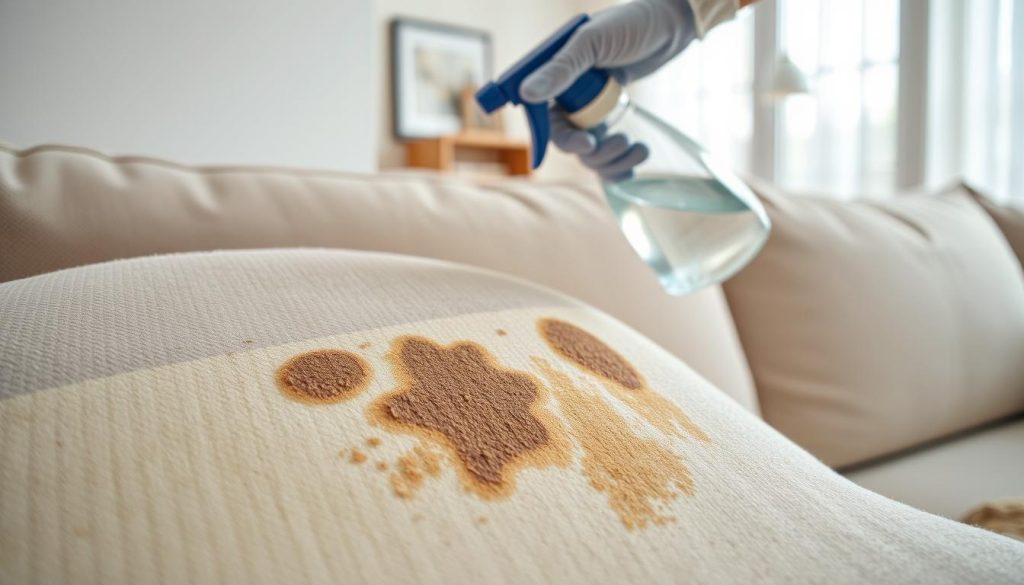
Too much product or water in the process
Overdosing product leaves a sticky film. That residue acts like a magnet and draws dirt and future stains faster than a properly rinsed surface.
Using too much water spreads soiling and forces grime deeper into fibres. It also lengthens drying time and raises the chance of musty odours.
Residue, damp use and backing risks
The “looks clean when wet” trap happens when suds hide soil that is not fully removed. Once dry, the fabric can look patchy or dull.
Sitting on damp upholstery transfers body oils and creates fresh marks. We insist on a strict no-use window until the piece is dry.
Over-wetting can damage sensitive backings and cause shrinkage on certain materials such as jute-backed pieces. This is a technique issue, not a method fault.
Prevention steps we follow
- Measure dilution and use minimal moisture.
- Perform multiple extraction or blotting passes until no residue remains.
- Keep the area ventilated and avoid use until fully dry.
How we tackle stains and odours on fabric sofas
We set out a simple workflow that prevents a small mark from becoming a large problem. Our goal is consistent stain removal and odour neutralisation while protecting fibres and backings.
Spot treatment workflow
Blot first: lift liquid with a clean cloth; never rub. This reduces spread and limits dye transfer.
Apply sparingly: test a hidden area and dilute according to label before use. Use small amounts of solution so the padding stays dry.
Controlled agitation: work from the outside in with gentle strokes to avoid a larger mark. Repeat blotting until no transfer shows.
Pet messes and persistent smells
For pet incidents we favour enzymatic or odour-neutralising concentrates that do not leave sticky residue. Examples we use are Hoover Pet Portable Spot Cleaner Solution and Odorcide Cat Attack Concentrate, always diluted and patch-tested.
Neutralise, don’t mask. Treat the source, extract excess moisture and ventilate. Damp padding can trap smells and attract dirt later.
| Stain type | Immediate action | Follow-up |
|---|---|---|
| Water-based (tea, juice) | Blot, dilute cleaner, blot | Repeat; air dry with fan |
| Oily (food, grease) | Absorb with powder, brush off, apply solvent | Extract residue; test for colourfastness |
| Pet urine | Blot, enzymatic solution, extract | Neutraliser; dry thoroughly |
“Work slowly and test first; good technique beats stronger products every time.”
Maintenance between deep cleans
Routine attention stops small marks and grime from becoming a large problem that needs intensive work. Good maintenance keeps our upholstery looking better for longer and reduces how often we need a major service.
Routine vacuuming to reduce dust and extend intervals
We vacuum weekly, focusing on armrests, headrests and seat fronts where oils and dust collect first. This simple habit removes loose particles before they bind to fibres and makes deep cleaning less frequent.
Rotating cushions for even wear and faster drying
After each clean we rotate and flip cushions. This prevents sagging, evens wear and helps all surfaces dry more evenly when we ventilate.
Plan airflow: allow generous drying time with fans or open windows in the day. Proper drying prevents mustiness and new marks from appearing before the fabric settles.
- Weekly: quick vacuum and spot-check high-contact zones.
- Monthly: flip and rotate cushions; check seams and piping.
- After any spill: act fast, blot and ventilate thoroughly.
Consistent care is the most cost-effective way to extend lifespan and maintain comfort between deep cleans. For a practical machine-based guide, see our recommended extractor method at clean your couch with a carpet.
Conclusion
In closing, we set out how technique, ventilation and sensible product use deliver lasting results at home. The best outcome comes from matching the method to fabric and soil, then following a clear process that avoids residue and over‑wetting.
We choose shampoo for targeted stains and quicker refreshes, and we favour steam when a fibre‑deep result or allergen reduction is the priority for heavily used seating.
Singapore’s humidity makes drying and airflow non‑negotiable. Fans and good ventilation reduce odour and the risk of mustiness after a session.
Use the right equipment and modest products; we can often do an effective job ourselves, but engage a cleaning service for delicate fabrics or persistent problems.
Regular maintenance keeps a sofa comfortable, presentable and more hygienic, and, like car care, the correct tool and steady technique beat the “strongest” chemical every time.

