

We present a practical, step-by-step guide for Singapore households who want to care for a fabric upholstered sofa safely and effectively.
By living at home with pets, guests and the odd spill, the large surface area of these pieces sees crumbs, drinks and daily wear. Regular attention keeps appearance and comfort high while avoiding early replacement costs.
Here we clarify what we mean by a cloth sofa cleaner: anything from a targeted upholstery product to a spray-extraction machine used for deep work. Our approach is careful and practical, with fibre protection as a priority.
Follow a clear cleaning journey: label check, preparation, dry vacuuming, spot treatment, deep clean, deodorise and correct drying. For more on techniques and tips, see our detailed piece on how to clean a fabric couch.
Why fabric sofas get dirty fast in Singapore homes
In Singapore homes, upholstered furniture faces constant wear from daily life. We see oils, crumbs and pet hair gather where people sit most.
Everyday contact transfers body oils to armrests, headrests and seat fronts. Over weeks this makes the fabric sofa look dull and feel less fresh.
Everyday debris, pet hair and oils
Crumbs, grit and pet hair collect in seams, creases and under cushions. Those particles work deeper into fibres and increase visible dirt.
Spills from tea time and snacking
The living room is a spill hotspot: tea, coffee, soft drinks and sauces can leave stains during entertaining. Quick spot treatment helps stop marks from setting.
Humidity, slow drying and mould risk
Singapore’s high humidity slows evaporation after cleaning or spills. Moisture that lingers can cause musty odours and mould growth if not dried properly.
| Issue | Where it appears | Effect |
|---|---|---|
| Body oils | Armrests & headrests | Dulling of fabric; greasy feel |
| Debris & pet hair | Seams, creases, under cushions | Embedded dirt; harder to remove |
| Spills | Seat fronts, cup-holders | Stains if not blotted quickly |
| Humidity | Whole piece after wet clean | Slow drying, odours, mould risk |
We recommend fast spot action plus routine deep cleaning to keep the fabric sofa looking and smelling fresh. Proper drying completes effective cleaning and prevents long-term discolouration.
Check your sofa fabric label before cleaning
Labels hold crucial rules; we read them first to plan the safest cleaning route. The tag gives clear instructions on which products and method are safe for your upholstery.
Understanding cleaning codes: W, S, WS and X
We find labels under cushions, along the base or at the back. Always inspect these hidden spots before any wet work.
- W – use water-based cleaners.
- S – solvent-only products.
- WS or S/W – water or solvent acceptable.
- X – vacuum only; avoid DIY wet cleaning and seek professional advice.
How we choose a safe cleaning method
We base our choice on fibre type, colour fastness and wear patterns. Patch testing in an unseen area is essential before full application.
“Discolouration often follows the wrong cleaner, excess moisture or uneven drying.”
We apply products sparingly. More solution is not better; controlled application protects fibres and helps to keep fabric clean. For detailed label guidance see how to read upholstery labels.
Tools and products we keep ready for sofa cleaning
We keep a compact kit ready so cleaning is quick and safe. The right items stop us from improvising with rough sponges or soaking towels that harm fibres.
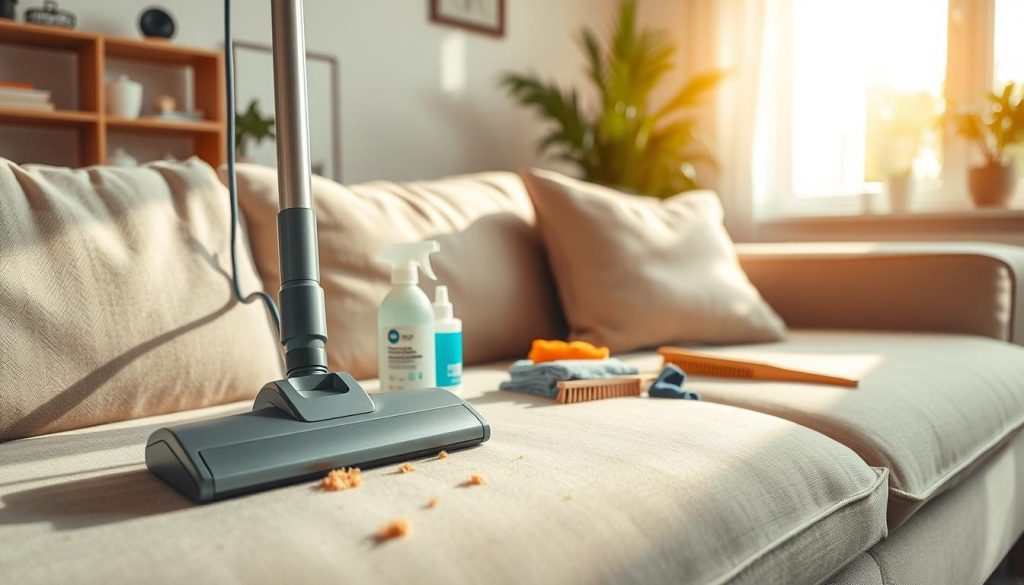
Vacuum cleaner and attachments
We use a vacuum cleaner with an upholstery nozzle to remove crumbs and dust. The nozzle focuses suction to lift particles without snagging threads.
Regular vacuum passes prevent grit from working deeper into fibres and reduce the need for deep cleaning.
Cloths, brush and blotting supplies
A soft brush and microfibre cloths help loosen dirt and groom fibres. We always keep a clean dry cloth for immediate blotting.
Blotting stops stains spreading and soaks up excess moisture after any wet pass.
Safe liquids and basic products
For water-safe fabrics we mix distilled water with mild dish soap or a dilute white vinegar solution. Baking soda works well for odours and lifting light soil but not for set-in stains.
When to use heavier equipment
We escalate to a spray extraction or wet & dry vacuum for embedded grime. When labels allow, a steam cleaner gives a chemical-free refresh.
For guidance on converting a spray extraction method or using a wet & dry setup, see our short guide on the spray extraction method.
Pre-clean preparation that makes every method work better
Preparation matters: remove loose items and reveal hidden dirt before you begin. We clear throws, toys, remotes and any loose clutter so the cleaning is even across the whole seating area.
Lift cushions and check hidden zones. We lift each cushion to inspect seams and under-pillow gaps where crumbs, hair and compacted debris collect. This lets us target vacuuming and reduces future staining.
How we run a simple pre-clean routine
- Remove items and surface clutter from the area.
- Lift and rotate cushions; brush loose debris into view.
- Vacuum seams, crevices and the exposed base before any wet work.
Spot testing to protect fabric
We always test any chemical, shampoo or spot product in an inconspicuous area. Apply a small amount, wait five to ten minutes, then check for colour change, water rings, stiffness or fibre distortion.
| Action | Why it matters | Outcome |
|---|---|---|
| Clear loose items | Prevents uneven application | Even cleaning and fewer missed spots |
| Lift cushions | Exposes compacted debris | Better dirt removal and less odour |
| Vacuum first | Removes surface grit | Reduced streaks and easier deep clean |
| Spot test cleaners | Checks colourfastness | Lower risk of discolouration on a full clean |
When a fabric looks delicate or richly dyed, we wait longer after testing. This cautious approach helps the later cleaning method work better and leaves a cleaner sofa finish that dries more evenly.
Dry vacuuming for a clean fabric sofa surface
Starting with a dry vacuum keeps dust from turning into muddy residue during later cleaning. We always run this step first because loose particles can otherwise sink deeper when wet and create stubborn marks.
Working top-to-bottom and targeting seams, creases, and under cushions
We vacuum from the top down in slow, overlapping strokes. Slowing near seams, piping and tufts helps lift hidden dirt and crumbs without roughing fibres.
Using a turbo upholstery nozzle to lift stubborn dirt and hair
For hair and embedded grit we fit a turbo upholstery nozzle. The rotating air-driven brush lifts human and pet hair more effectively than suction alone.
How water-filter vacuuming helps reduce dusty exhaust air indoors
When indoor air matters, we use a water-filter vacuum cleaner such as the Kärcher DS6. Its water filter traps particles and gives roughly 99.5% dust-free exhaust, a real benefit in compact flats.
- Done standard: the surface looks even, feels less gritty and the vacuum canister shows reduced pickup on a final pass.
How to spot clean fresh stains without damaging the fabric
Fresh action matters. When a spill occurs we act quickly and calmly. Fresh stains respond best to quick, calm steps that focus on absorption rather than scrubbing.
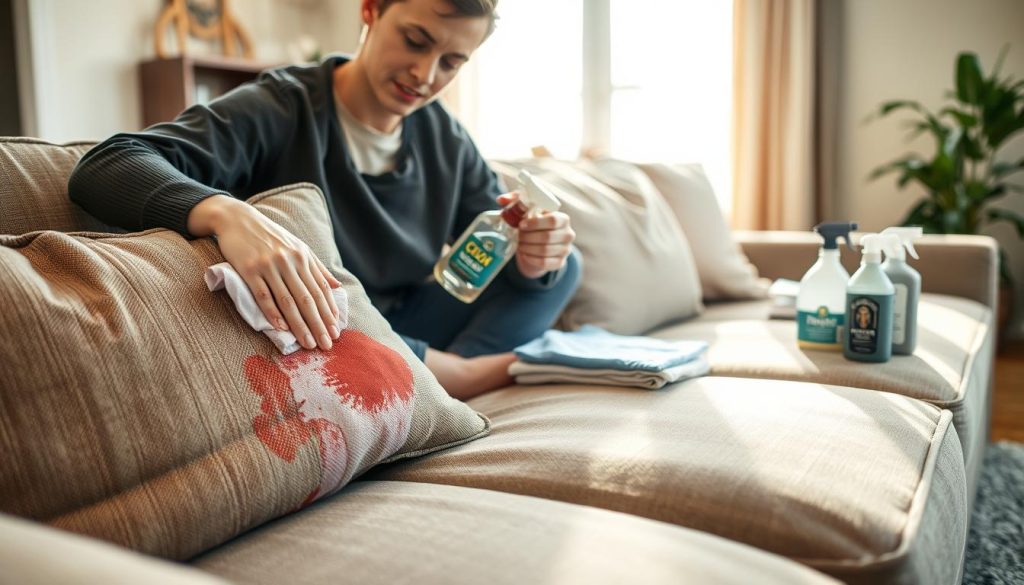
Blot, don’t rub
Our first rule is to blot liquid spills with a clean dry cloth. Press gently, lift and rotate the cloth to a clean area so we absorb the stain instead of smearing it.
Do not rub. Rubbing drives liquid deeper, spreads the mark and can roughen the fabric surface.
Using a targeted stain remover safely
For stubborn marks we apply a small amount of solution to a clean dry cloth first, not directly onto the upholstery. Dab the area, let the product work briefly, then re-blot to lift residue.
Always test in an unseen spot and repeat dab-and-blot rather than heavy application. This keeps colours true and reduces fibre stress.
Handling dried spills and solid debris
For dried spills we loosen crusted bits with a very dry stiff-bristled brush. Work gently so we do not grind particles in.
After loosening, vacuum the area using the upholstery nozzle or a compact vacuum cleaner. This removes loose debris before any wet spot work.
- Quick spot cleaning: blot and dab — usually enough for fresh stains.
- Escalate: if the mark remains after careful spot work, consider a deeper method or a professional service. For guidance on moving to spray extraction or deeper cleaning, see our short guide on deep cleaning with a carpet machine.
Deep cleaning with a cloth sofa cleaner for set-in stains
For stubborn, aged dirt we move from surface care to a controlled spray-extraction routine. This method forces a warm cleaning solution into fibres, then removes suspended soil with suction. The result is a deeper clean without over-wetting the upholstery.
Why spray extraction works
Spray extraction delivers solution into the pile, breaks bonds holding grime, and the machine then extracts the loosened soil. This two-stage action cleans beneath the surface while limiting residue.
Mixing the solution and safe dwell time
We fill the tank with warm water — up to 50°C — for better dissolving power. Add Kärcher Carpet Cleaner RM 519 at 100–200 ml depending on how dirty the area is.
For heavy dirt, we let the mix dwell for at least 5 minutes so it loosens stubborn grime before extraction.
Spray, vacuum, repeat — a practical sequence
Follow a clear step sequence:
- Dry vacuum loose dirt first.
- Spray evenly and allow the dwell time.
- Extract slowly with overlapping passes to lift moisture and soil.
- Repeat spray and extraction for persistent stains.
Rinsing and finishing expectations
Optionally rinse with clean water to reduce detergent residue that can attract future dirt or stiffen fabric. Allow the piece to dry for a few hours or overnight in Singapore’s humid climate.
- Final vacuum once totally dry to fluff fibres and restore texture.
“Deep cleaning improves look and feel, but correct drying prevents musty odour and mould.”
Steam cleaning fabric sofas to refresh and sanitise
A targeted steam pass can lift grime and reduce microbial load on upholstery when labels permit.
When steam is suitable
We choose steam cleaning only if the manufacturer tag allows heat and moisture. On fabrics marked W or WS, a steam cleaner gives a chemical-free refresh.
Steam works well to loosen surface grime, reduce bacteria and kill dust mites without detergents. It is not a cure-all for set-in stains or dye transfer.
Our four-step steam workflow
- Vacuum thoroughly to remove loose dirt and hair.
- Work in slow, controlled steam passes. Avoid repeated steaming in one spot to prevent over-wetting.
- Air dry fully with good airflow; Singapore humidity makes this step vital.
- Vacuum again once dry to remove loosened debris and dead dust mites.
| Step | Why it matters | Tip |
|---|---|---|
| Vacuum first | Removes grit that can trap moisture | Use an upholstery nozzle |
| Steam pass | Sanitises and loosens grime | Use a steam cleaner with controlled output |
| Air dry | Prevents odour and mildew | Keep airflow high; open windows or use fans |
| Final vacuum | Removes loosened particles and allergens | Wait until fabric is completely dry |
“Steam refreshes high-contact zones while avoiding harsh chemicals.”
Note on machines: Some models combine steam with suction and multi-stage filtration (for example, the Kärcher SV7). These can speed drying and trap particles with water and HEPA stages.
Deodorising and lifting embedded dirt with baking soda
A short treatment with baking soda can revive tired fabric and make routine cleaning more effective. It works as a gentle deodoriser and lifts light trapped dirt from the surface before deeper work.
Timing and where we apply it
We sprinkle evenly over seat centres, back cushions, armrests and along seams. Let it sit for about 15–20 minutes; leave longer for stronger smells.
How we finish the job
After the dwell time we vacuum slowly and thoroughly using an upholstery nozzle. This pulls away the powder and suspended particles so the fabric feels fresher.
- What it helps: freshen and remove light grime between deep cleaning sessions.
- What it does not do: it will not remove set-in stains — extraction or professional cleaning is needed.
- Neat-use tips: apply with a sieve, keep windows open and vacuum in overlapping passes.
Regular use — monthly for high-use areas — keeps the seating smelling better and reduces swings between “fine” and musty. For a truly clean sofa finish, pair this step with scheduled deep cleaning.
Drying and aftercare so your sofa stays cleaner for longer
Rapid, even drying is the crucial step after any wet cleaning. In Singapore’s humid climate, trapped water invites mildew, odours and faster re-soiling. We treat drying as a planned part of the cleaning process, not an afterthought.
How we dry the area quickly to help prevent mould and mildew
First, blot excess moisture with a dry cloth to remove surface water. Repeat until most liquid lifts away.
Then maximise airflow. We set fans or air‑con to dehumidify mode and open windows when possible. Avoid sitting on the upholstery until the area feels fully dry.
Fluffing fibres and final vacuuming once the sofa is fully dry
Fully dry means no cool dampness or darker patches. When the fabric feels normal to the touch, we lightly brush to lift pile and finish with a final vacuum to remove loosened grit.
Maintenance rhythm and prevention
Our simple routine keeps the piece looking better: weekly vacuum, monthly baking soda deodorise and a deep clean every 6–12 months depending on use, pets and spills.
- Prevention tips: rotate cushions, use washable throws and treat spots immediately.
- Fast step: blot with a dry cloth, boost airflow and wait until fully dry before use.
“Proper drying protects fibres and makes each deep clean last longer.”
Conclusion
Finally, a clear end-to-end routine helps you maintain a welcoming seating area with minimal fuss.
Start by checking fabric labels so we match method and product to the tag. Then dry vacuum, act fast to blot fresh stains and follow product instructions for any spot work.
Escalate sensibly: vacuum for routine dirt, spot treat fresh marks, use spray extraction or a suitable cleaner for embedded stains, and use steam only when the label allows.
Remember that residue and excess water are the main reasons a sofa looks dirty again. Rinsing where suitable and disciplined drying prevent odour and mould.
Small weekly actions keep fabrics fresher, reduce heavy cleans and protect fibres, so our sofas stay guest-ready and the indoor air feels cleaner all year.

