
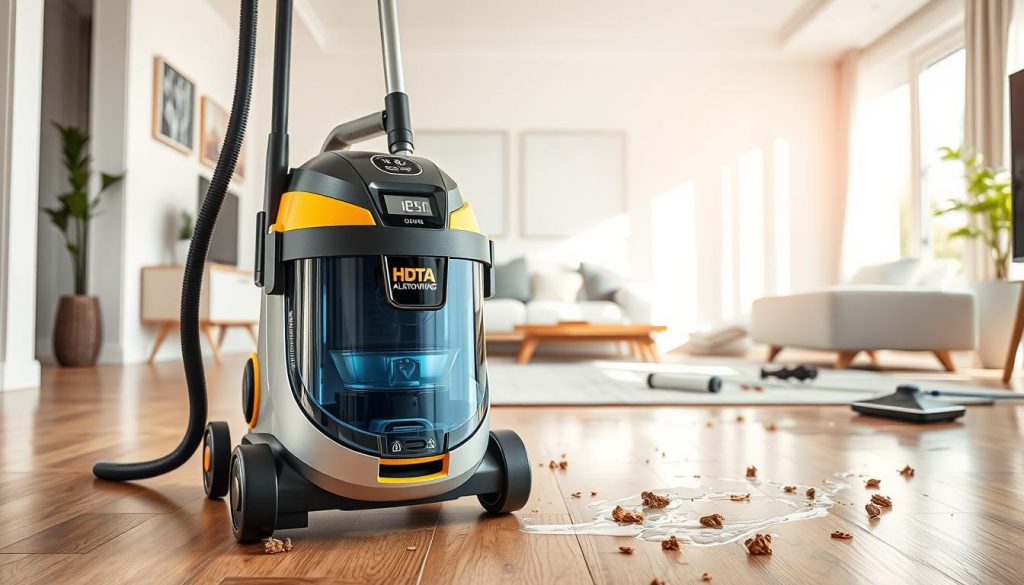
We set out to test models that promise quick, reliable cleaning for Singapore flats and houses.
Our focus is simple: real-world performance, sensible features and honest value for money. We inspect tank size, suction, filters including HEPA, noise, cord options and included accessories.
In this roundup we preview our top picks and explain what genuine automation looks like in daily use, not just on a spec sheet.
We also outline core trade-offs: one-pass wash plus sweep convenience versus heavier build, higher noise and a higher price than a standard model.
This guide is for families dealing with spills, pet owners with fur, and anyone who wants faster cleaning without hauling a mop bucket. Jump to quick comparisons or read on for details about tanks, runtime, rollers and robot alternatives.
What makes an automatic wet and dry vacuum cleaner worth buying in Singapore right now
Singapore homes need tools that turn quick messes into quick fixes. We focus on practical benefits that matter day to day.
Why it fits families: Homes with children and pets face frequent spills, muddy paw prints and scattered food. A single unit that picks up debris and washes hard floors cuts total chore time. It also helps reduce slipperiness and odour from leftover water.
Real-life use: spilled drinks and pet hair are common. These machines let us tackle both without swapping tools.
Comparing performance and trade-offs
These models usually offer greater power and stronger suction than standard options. That extra torque helps remove dried messes and soaked crumbs.
Expect more noise, extra weight and a larger tank. The cost of convenience includes rinsing parts and learning to empty dirty water without splashes.
- Good fit: flats where quick daily cleans beat weekly deep cleans.
- Consider: storage space, handling bulk and service access for filters.
| Benefit | Why it helps | Typical trade-off |
|---|---|---|
| Two-in-one function | Handles liquid spills and debris in one pass | Heavier than single-use machines |
| Higher power | Stronger suction for pet hair and stuck dirt | More noise during use |
| Larger tank | Fewer refills on bigger jobs | More parts to clean after use |
Wet and dry vacuum cleaners explained: what they do (and what they don’t)
We outline the core job these two-in-one units perform, so buyers know what to expect in a Singapore home.
How one-pass cleaning works
These machines pick up debris while applying water or a mild solution to wash sealed floor surfaces. Dirty water is captured in a separate tank for disposal.
They handle liquid spills, dust, hair and light debris in a single pass most of the time. Thick sauces, sticky residues or dried-on messes may need a second pass or spot treatment.
Where they work best
Best fit: hard floors such as homogenous tiles, marble and other sealed surfaces that tolerate water well. They speed up routine care across common Singapore finishes.
Limits, rollers and hygiene
These units do not replace deep grout scrubbing, care for unsealed timber or full carpet shampooing. Choose a model with a good brush and well-designed roller if you have long hair or fine dust; some rollers resist tangles better than others.
Finally, rinse the dirty-water tank after use. Warm, humid conditions make unwashed tanks smell quickly, so basic hygiene prevents odour and bacteria build-up.
Automatic features that genuinely save time
Smart sensors now decide how much suction power and water a machine needs on each pass. This reduces passes and stops over-wetting lightly soiled floors.
Smart dirt detection that adjusts suction and water flow
We favour models with real-time dirt sensing like Tineco iLoop or Narwal AI Dirt Sense. They shift modes and boost suction only where the mess needs it, saving time and water.
Self-cleaning rollers and anti-odour design
Self-cleaning systems cut minutes spent rinsing. A quick roller rinse and drying cycle reduces lingering smells in humid Singapore homes.
Edge, corners and manoeuvrability
Dual-side or triple-sided edge designs reach closer to skirting lines and tight corners. Traction wheels and lay-flat crews, such as Dreame’s fold-flat form, lower arm strain and let us reach under low furniture easily.
- Why it matters: fewer button presses thanks to sensible auto modes.
- Practical win: less time emptying the water tank and less post-clean fuss.
How we tested and compared these vacuums for Singapore homes
We ran repeatable tests on typical Singapore messes to see which models stand up in daily use.
Testing used the same mess patterns across homogenous tiles, polished marble and wood-look surfaces. These floors reveal differences in brush action, streaking and water pick-up quickly.
Performance on common local flooring
We checked how each unit handled crumbs, pet fur and light stains on reflective floors. Marble and tiles exposed streaking and drying time. Wood-look surfaces showed whether seals tolerate the water system.
Real-world metrics we prioritised
Our core measures were suction power (Pa or Air Watts), clean and dirty tank volumes, usable battery life and realistic runtime. We noted charge time and how long high-power mode held up under repeated passes.
What we counted as “automatic”
We considered sensor-led dirt detection, multiple modes, self-clean cycles and assisted handling such as traction wheels and lay-flat designs. These features must act predictably to save us time.
Maintenance checks formed part of the score. We timed emptying the water tank, rinsing rollers and running a self-clean cycle without spills.
| Test item | What we measured | Why it matters |
|---|---|---|
| Suction spec | Pa / Air Watts | Shows raw pickup on hair and stuck dirt |
| Tank volumes | Clean / Dirty (ml) | Determines refill and empty frequency |
| Runtime | Normal / High (mins) | Reflects usable time per charge |
| Auto features | Sensors, modes, self-clean | Reduces passes and post-use fuss |
Quick comparison: top picks at a glance
To help quick decisions, we boiled our testing into four clear recommendations. Read each short pick to see who it suits, the key specs and the main trade-offs. This lets you shortlist a model in under a minute.
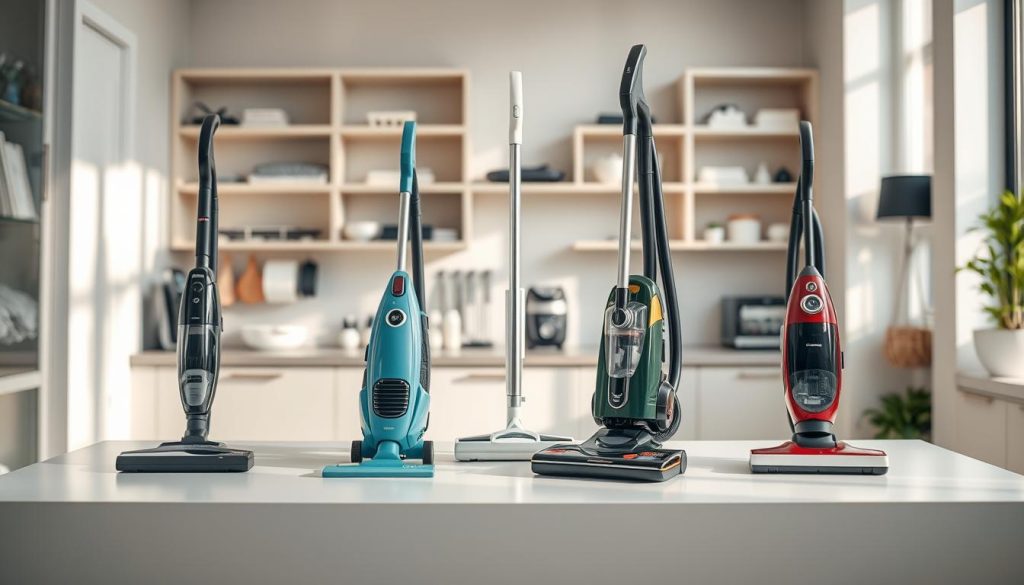
Best overall: Tineco Floor One Switch S7 Stretch
Who it suits: most households that want strong performance and sensible features.
Key factors: long battery life, high suction power and a large water tank. Trade-off: a higher price but clear value for frequent use.
Best for pet hair: Bissell CrossWave X7 Cordless Pet Pro
Who it suits: pet homes needing targeted fur pickup.
Key factors: specialised pet tools and tangle-resistant brush. Trade-off: slightly shorter battery life under turbo modes.
Best budget buy: Simplus Cordless Wet-Dry Vacuum Cleaner
Who it suits: smaller flats on a budget seeking usable features.
Key factors: good suction power for the price and compact handling. Trade-off: fewer premium extras and smaller water tank.
Most manoeuvrable: Narwal S20 Pro
Who it suits: users who prioritise handling and reach.
Key factors: lightweight build, smart sensing and quick corner access. Trade-off: price reflects the extra agility.
| Pick | Best for | Standout spec | Typical trade-off |
|---|---|---|---|
| Tineco Floor One Switch S7 Stretch | Most households | Battery life: long · Suction power: high · Water tank: large | Higher price, full-size handling |
| Bissell CrossWave X7 Cordless Pet Pro | Pet hair control | Pet tools · good brush design · solid suction | Shorter runtime in turbo |
| Simplus Cordless Wet-Dry Vacuum Cleaner | Budget flats | Strong suction for price · compact tank | Fewer premium features |
| Narwal S20 Pro | Manoeuvrability | Light build · smart sensing · great edge reach | Higher price for agility |
We detail full specs, pros and cons in the next sections so you can match price to value for your routine.
Overall best automatic wet and dry vacuum cleaner for most households
For most households we found one model that consistently balanced power, runtime and ease of upkeep.
Tineco Floor One Switch S7 Stretch: iLoop sensor, dual-side roller and attachments
Why we rate it: the S7 Stretch performs reliably on mixed messes rather than winning on one spec alone. Its iLoop sensor detects wet and dry dirt and adjusts suction and water flow to speed drying and avoid streaks.
Edge advantage: the dual-side roller reaches about 0.5cm from skirting, so crumbs and hair along edges clear without extra passes. The brush design resists tangles and lifts trapped fur easily.
Key specs for quick buying decisions
Numbers that matter: 22,000 Pa suction power, a 1,000 ml clean tank (720 ml dirty tank), and up to 70 minutes runtime in vacuum mode. In practice this means fewer refills for a typical flat and enough run time for a full apartment on one charge.
- Switches to a stick vacuum for stairs and upholstery.
- Includes useful attachments for corners and crevices.
- Charge time: ~4.5 hours; maintenance: empty tanks and rinse roller after each use to keep sensors accurate.
Best for stubborn stains and oily spills with hot-water mopping
When spills turn sticky and oily, a hot-mop option can save us time and elbow grease. The Dreame H15 Pro Heat targets kitchen grease films by channeling very hot water straight to the brush head.
Dreame H15 Pro Heat: 85°C hot-water channeling to the brush
How it works: this dreame model pumps water heated to 85°C to the rotating brush. Heat loosens oil and dried sauces so the brush and suction remove them in fewer passes.
Why we like it
Key specs: 22,000 Pa suction power, an 800 ml clean tank and a 650 ml dirty tank. In normal mode it can run up to 70 minutes; hot-water mode drops to about 25 minutes.
Practical wins: triple-edge cleaning reaches closer to skirting and the flat-folding design plus auto-traction wheels help manoeuvre tight kitchen aisles. That makes dealing with greasy debris faster and neater.
What to watch
The unit weighs 6 kg, so lifting and carrying upstairs will be noticeable. Also, reserve the hot-water feature for sealed hard floors; prolonged use on unsealed wooden floorboards may be too harsh.
Our tip: use hot-water mode for problem zones only and stick to normal mode for everyday cleaning to balance battery, water and maintenance time.
Best wet and dry vacuum cleaner for pet hair and everyday fur control
Pet owners face a unique mix of fur, dander and tracked-in dirt that changes daily. We need a tool that lifts hair, handles small accidents and freshens floors without fuss.
Bissell CrossWave X7 Cordless Pet Pro: Turbo Pet mode and cleaning solution support
Why it helps: Turbo Pet mode boosts suction and brush action for embedded hair, while the machine accepts Bissell cleaning solution to tackle odour-prone spots.
Key specs: up to 20,000 Pa suction power, 30 minutes maximum runtime, 820 ml clean / 420 ml dirty tank volumes and ~4 hours charge time. These numbers set realistic expectations for small to medium flats.
Best use: hard floors and rugs in pet-heavy homes where daily crumbs and fur are the main issue. It works well on tracked-in dirt and light stains; very large homes may need multiple charges.
- Switch to Turbo Pet for embedded hair, normal mode for crumbs.
- Rinse the dirty tank promptly; pet solution increases rinse frequency.
- Check brush ends and roller for trapped fur to prevent odour build-up.
For further pet-focused recommendations see this best vacuum for pet hair guide.
Best value picks for smaller flats and tighter budgets
For tight layouts, design and run time matter as much as raw suction numbers. We define “best value” as enough power for daily cleaning, practical tank sizes and features that cut upkeep without a premium price.
Simplus Cordless: budget all-rounder with wide reach
Simplus delivers 21,000 Pa suction power, a 500 ml clean / 550 ml dirty water tank and up to 50 minutes runtime. Its 180° flat-folding head and 6.5 cm brush access tight corners and close to the edge.
Dibea H8: balanced tanks and smart modes
The Dibea H8 offers 13,000 Pa suction, 500/600 ml tanks and built-in self-cleaning. Multiple cleaning modes suit wooden, marble and ceramic tiles, giving flexible performance for small flats.
Shark HydroVac WD210SM: odour control focus
Shark’s low-suction model (2,700 Pa) pairs antimicrobial rollers to cut bacterial growth and reduce smells in humid homes. It sacrifices peak power but gains hygiene benefits for frequent use.
| Pick | Suction | Water tank | Runtime |
|---|---|---|---|
| Simplus | 21,000 Pa | 500/550 ml | 50 min |
| Dibea H8 | 13,000 Pa | 500/600 ml | 38 min (auto) |
| Shark WD210SM | 2,700 Pa | 500/360 ml | 30 min |
Practical tip: check roller compatibility, approved solutions and rinse the tank after each session. Value is more than price; it includes upkeep time and consumable costs.
Most manoeuvrable option for quick daily cleans
In tight, busy homes, nimble handling often beats sheer power for everyday tidying. The Narwal S20 Pro focuses on movement, reach and smart sensing to make fast passes feel effortless.
Narwal S20 Pro: lightweight build, AI Dirt Sense and five cleaning modes
Why it stands out: at 4.27 kg the unit is easy to lift, push and steer. Less wrist strain means we are more likely to tackle quick messes straight away, saving time and chores piling up.
AI Dirt Sense adjusts intensity as it detects dirt on the floor. That means higher suction when a crumb trail appears and a gentler pass for light dust.
Why it suits busy households: triple-sided edge cleaning and flat-folding design
The triple-sided edge reach clears closer to skirting boards, which cuts missed lines along walls.
The flat-folding design helps us reach under low cabinets without awkward posture. Together these features reduce follow-up work.
- Key specs: 20,000 Pa suction power, 790 ml clean / 720 ml dirty tank.
- Maximum runtime ~60 minutes; charge time ~3.5 hours; supports hot water mopping.
- Five cleaning modes suit routine dust, heavier debris and quick spot cleans.
We find this model best for homes that value reach, practical design and easy handling over brute-force numbers. It makes short jobs quicker and less of a chore.
Dyson wet and dry options in Singapore: are they worth the premium?
Deciding whether Dyson’s premium price is justified depends on how much you value airflow engineering and filtration. We test three Submarine models to see if light weight, refined design and brand-backed R&D deliver practical wins in Singapore flats.
Why Dyson costs more
R&D, cyclonic suction and advanced filtration drive the price. Dyson invests heavily in motor and cyclone design to keep suction consistent as tanks fill. That makes cleaning feel more reliable across repeated passes.
The filter systems suit allergy-conscious homes. Better seals and HEPA options reduce fine dust recirculation during cleaning.
Model highlights
| Model | Air Watts | Tank (clean/dirty) | Runtime |
|---|---|---|---|
| V12s Origin Submarine | 130 | 300/360 ml | Up to 60 min |
| V12s Detect Slim Submarine | 140 | 300/360 ml | Up to 60 min (HEPA) |
| Digital Slim Submarine | — | 300/360 ml | ~40 min (compact) |
For smaller homes that value low weight and refined design, Dyson can feel uniquely convenient. If longer sessions or a larger water tank matter more, rival models often give better value for price.
Choosing the right size tanks and water system for your space
Tank size shapes how often we stop, how heavy the unit feels and whether a single pass will finish the job.
Clean versus dirty tank volumes decide “less refilling” in practice. A 1,000 ml clean tank (Tineco) lets us cover larger flats without topping up. But a small dirty tank forces an early stop even if the clean tank still has water.
When larger tanks help: bigger homes and longer cleaning sessions benefit from bigger clean and dirty tanks like Tineco’s 1,000/720 ml, Dreame’s 800/650 ml or Narwal’s 790/720 ml. Fewer refills save us time on long runs.
When smaller tanks win: HDB flats and tight storage favour compact units such as Dyson’s 300/360 ml or Shark’s 500/360 ml. Lighter carry weight and faster grab-and-go cleaning matter for quick spills.
| Model | Clean tank | Dirty tank |
|---|---|---|
| Tineco | 1,000 ml | 720 ml |
| Dreame | 800 ml | 650 ml |
| Dyson | 300 ml | 360 ml |
Practical tip: match tank sizes to your routine. Choose larger tanks for weekly deep cleaning and open-plan homes; choose smaller tanks for daily quick cleans and easy storage. Rinse and dry tanks after use to avoid smells in Singapore’s climate.
Suction power, rollers and brushes: what matters on hard floors
What really matters on sealed floors is how suction works with the roller and brush to pull up debris without leaving marks.
Understanding Pa versus Air Watts
Suction is reported in Pascal (Pa) for many floor washers — typical figures are 20,000–22,000 Pa — while some brands use air watts (Dyson shows ~130–140 Air Watts). These metrics are not directly interchangeable.
Pa measures pressure; Air Watts describe usable airflow energy. That means a high Pa number on an upright floor washer does not always match Air Watts from a stick unit in real cleaning feel.
Roller and brush design for hair, dust and debris
A soft, angled roller lifts fine dust and spreads cleaning fluid evenly. A stiffer brush helps shift stubborn crumbs and pet hair.
Look for anti-tangle rollers, mixed-fibre brushes and replaceable heads if you have long hair or animals. These features reduce snags and keep pickup rates high during a single pass.
Edge performance: closer to walls and corners
Edge reach is a make-or-break trait in real homes. Models like Tineco reach ~0.5cm to skirting; Narwal’s triple-sided design cleans tighter into corners.
“Close edge reach saves follow-up work and keeps bright tiles streak-free under strong light.”
| Aspect | Why it matters | What to prioritise |
|---|---|---|
| Suction vs airflow | Real pickup and water removal | Compare specs + real tests |
| Roller type | Hair, dust capture and tangle resistance | Anti-tangle, mixed fibres |
| Edge reach | Clears crumbs by skirting and in corners | Dual- or triple-side rollers |
Our buying tip: prioritise roller anti-tangle for pet hair, and edge reach for tight skirting; match suction and brush type to your Singapore floor finish for the best cleaning outcome.
Battery life, charge time and cleaning modes that fit real routines
Battery life shapes how often we stop and whether a quick tidy fits into our daily routine. Short bursts suit kitchen spills; longer runs suit a weekend reset.
Runtime expectations: normal, auto and high-power options
Quoted runtimes vary. Many models list up to 70 minutes in normal mode. High-power or hot-water modes can cut that to 20–30 minutes.
Practical tip: expect sensors to boost power when dirt rises. That reduces runtime even in auto settings.
Charge times to plan around: what 3.5 to 4.5 hours means day-to-day
Charge times commonly fall between 3.5–4.5 hours (Narwal and Dyson ~3.5h; Dreame, Bissell and Shark ~4h; Tineco, Simplus and Dibea up to 4.5h).
This means a single overnight charge is the norm. A midday top-up is possible but limited by time and dock location.
Mode selection for mixed messes: spills, crumbs and tracked-in dirt
Choose auto for mixed messes, higher power for thick debris, and gentle cleaning modes for daily dust to extend battery life and speed drying.
| Model | Runtime (normal) | Charge time | Notes |
|---|---|---|---|
| Tineco | Up to 70 min | 4.5 h | Large tank, steady power |
| Narwal | ~60 min | 3.5 h | Fast recharge, long runs |
| Dreame | 70 min (normal) | 4 h | Hot-water mode shortens runtime |
| Bissell | 30–40 min | 4 h | Good for small flats and spot cleaning |
Our advice: match runtime to your flat size. Longer runtime suits large spaces; shorter charge cycles and quick handling matter for frequent short cleans at home.
Robot vacuum or automatic wet/dry vacuum: which should we choose?
Choosing between a robot vacuum for routine passes and an upright that washes floors comes down to your daily habits and the mess you face. We weigh hands‑off convenience against direct control so you buy what actually saves time at home.
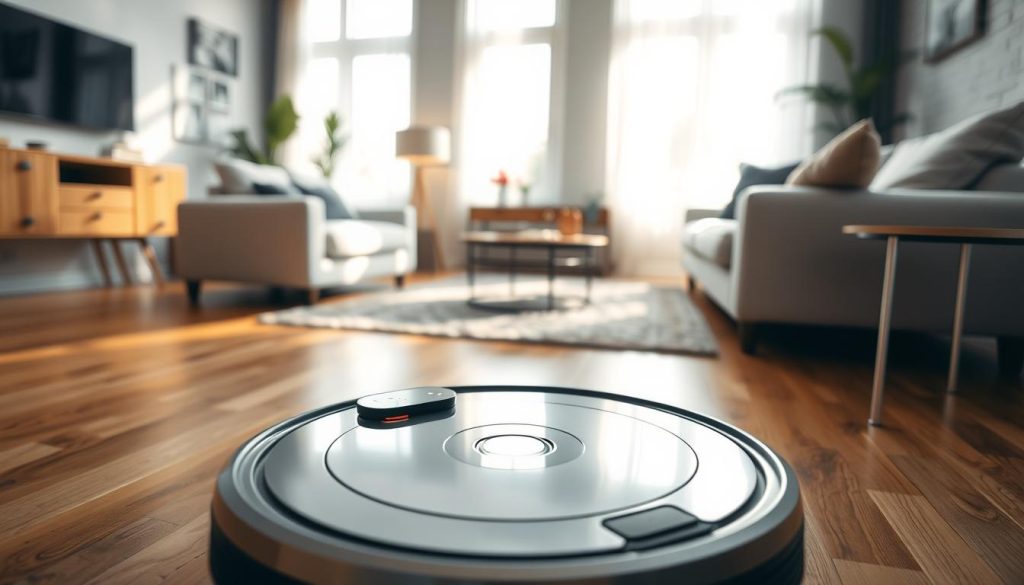
Vacuum‑and‑sweep versus true mopping: what robot hybrids do well
Robot hybrids shine at scheduled upkeep. They map rooms, follow routines and clear dust, hair and light debris on a regular cycle.
Best use: frequent runs that stop crumbs turning into bigger jobs. Many offer self‑docking, self‑emptying bins and object avoidance to reduce chores further.
When robot solutions make sense
Opt for a robot vacuum if you value mapping, zoned schedules and fully automatic recharging. They keep floors tidy with minimal input.
They suit busy Singapore flats where predictable daily passes cut effort. Self‑empty features and app control make them very hands‑off.
When uprights win: fresh spills, thicker debris and deep cleaning
Upright washers beat robots when you need immediate, targeted washes. They handle sticky liquids, thicker debris and areas that need stronger suction and active scrubbing.
Practical setup: we recommend pairing a robot for maintenance with an upright for spot deep cleans if your household faces varied messes.
| Task | Robot vacuum | Upright washer | Best for |
|---|---|---|---|
| Daily upkeep | Automated mapping, scheduled passes | Manual start, targeted areas | Small messes, routine dust |
| Fresh spills | Limited; mop pads are light | Strong suction and active washing | Immediate spill response |
| Thick debris | May struggle with large bits | Handles stuck crumbs and hair better | Deep pickup and scrubbing |
| Hands‑off convenience | High with self‑dock and empty | Lower; needs human control | Scheduled maintenance versus on‑demand cleaning |
Where to buy in Singapore and how to spot a good deal
We look beyond a low price to find value that lasts. A tempting tag can hide missing parts, a short warranty or hard‑to‑find consumables.
Common marketplaces to check
Start at Lazada, Shopee and Amazon. Check official brand shops such as LazMall or Shopee Mall for local warranty and authorised service.
Official stores often handle repairs faster and ship genuine spare parts. That saves us time when a part needs replacement.
What to compare beyond price
Don’t buy on sticker price alone. Compare bundled accessories, spare rollers, extra brush heads, filters and cleaning solution.
- Bundle contents: spare roller, brush, extra filter, solution sample.
- Warranty: local coverage length and where repairs are done.
- Consumables: availability of rollers, filters and approved solution.
- Listing match: confirm model number matches the Singapore set.
| Marketplace | Why check it | Key buy point |
|---|---|---|
| Lazada (LazMall) | Local stock, brand stores | Faster warranty claims |
| Shopee (Shopee Mall) | Frequent promos, seller ratings | Bundle deals with extra accessories |
| Amazon | Wide range of models, reviews | Compare global pricing; check local import terms |
Before checkout, verify delivery time, return window and service address. Confirm tank sizes, included attachments and whether spare parts are sold locally.
Our final tip: match promotions to need. A low price on the wrong model costs more in time and replacement parts later. Pick the product that fits your routine and long‑term upkeep.
Conclusion
,Our closing advice focuses on matching features to household habits for fuss‑free upkeep.
Match suction and roller design to the usual dirt and debris in your home. Pick tank size for how much water you want ready, and match battery life to the areas you clean most often.
For scheduled maintenance, a robot vacuum with mapping and self‑dock saves daily time. For quick spills and deeper mopping, choose an upright that offers stronger suction and active scrubbing.
Next steps: shortlist two models, compare warranty and consumables, and buy from a trusted Singapore listing that includes the right accessories. That simple framework makes buying quicker and keeps floors cleaner with less effort.

