

We introduce a clear guide to selecting a wet–dry unit that also works as a carpet cleaner for Singapore homes, from HDB flats to condos.
Our aim is to compare real specs and practical usability rather than repeat marketing claims. We focus on performance, ease of use, hygiene and overall price-to-value for local buyers.
Readers who want a single machine for everyday tidying and occasional water-based clean-ups will find this roundup useful. We flag trade-offs: heavier, more powerful models can mean better result but reduced portability.
We preview our top picks at a glance and note alternatives such as hot-water options, antimicrobial rollers and premium filtration. We will reference runtimes, tank sizes and real-world results so you can map choices to your layout.
Expect honest comparisons across models, ownership costs and practical upkeep to help you make a confident purchase decision.
Why wet and dry vacuums are taking over Singapore homes
We see more households choosing a multi-mode unit because it handles varied chores with less fuss. Singapore’s climate brings sudden rain, damp footwear and frequent water messes that standard machines can’t manage well.
From fine dust to liquid spills, a single device lets us switch modes and finish tasks faster. Corridors collect grit; kitchens see food and water on tiles. One machine replaces a two-step routine.
From dry dust to liquid spills: one machine for everyday messes
Families find that everyday cleaning becomes simpler. Kids’ drinks, art activities and meal drops are dealt with in moments. The same unit picks up hair, tracked-in grit and small amounts of water without swapping tools.
Why they’re especially handy for kids, pets, and rainy-day debris
Homes with pets benefit from reduced fuss when removing hair and occasional accidents. After wet weather, leaf bits and sand are easier to clear. We note trade-offs: higher power can mean more noise, greater bulk. Later we’ll test tanks, filters and self-clean routines to judge hygiene in humid flats.
| Common mess | How a wet dry vacuum helps | Trade-off |
|---|---|---|
| Spilled drinks | Immediate water pick-up, quick drying | Requires clean/dirty tank care |
| Fine dust and grit | Efficient suction for hallways | Heavier units can be less portable |
| Pet hair and accidents | One-pass pick-up for hair plus low-moisture spills | Noise may be higher than a standard vacuum |
What a wet and dry vacuum is, and how it differs from a regular vacuum
A true wet–dry unit handles spills and grit without the compromises of single-purpose machines.
In simple terms, a wet dry vacuum is built to pick up solid debris and water safely. It separates clean and dirty tanks and uses seals and filters made for moisture. That keeps internal parts hygienic after each use.
By contrast, a dry vacuum is not designed for liquid pickup. Using water in a dry-only unit risks damage, bad odour and safety hazards. For Singapore homes this matters after heavy rain or a kitchen spill.
Common formats and where a robot fits
Home formats include cordless stick multi-surface models for quick daily tasks, drum units for heavy jobs, and multi-function machines that swap heads for different floors.
Robot vacuum units handle routine dust and hair well, but they struggle with water stains, sticky messes and immediate spot cleaning. If you own a robot, a wet dry unit remains the manual deep-clean partner.
“Pick the right tool: routine automation plus a manual system gives the best coverage for mixed messes.”
| Format | Best for | Trade-off |
|---|---|---|
| Cordless stick | Daily quick clean, hard floors | Smaller tanks, limited runtime |
| Drum | Heavy spills, renovation debris | Bulkier, more storage space |
| Multi-function | Versatile homes, mixed floors | More complex maintenance |
Our testing-style checklist before you buy
Before we pick a model, we follow a practical checklist that mirrors real Singapore homes.
Tank capacity that fits your layout
Clean water and dirty water tanks must match your floor area. Small flats benefit from lighter units with modest tanks. Larger homes need bigger tanks to cut refill trips.
Suction, pickup and real-world performance
We test suction for fine dust, tracked-in dirt and heavier debris along skirting lines. Headline watts matter less than consistent pickup across corners and thresholds.
Filter system and hygiene
Standard filters suit daily cleaning. A HEPA filter is worth choosing if the household has allergies or fine dust concerns.
Mobility, runtime and accessories
Weight and design affect manoeuvrability in tight corridors. Cordless models trade reach for convenience; corded units give continuous power for long sessions.
| Criteria | What we measure | Why it matters |
|---|---|---|
| Tanks | Clean water/dirty water litres | Refill frequency, session length |
| Suction & power | Pickup of dust, dirt, debris | Real cleaning results, edge performance |
| Filter system | Standard vs HEPA | Allergen control, odour and hygiene |
| Accessories | Brush, crevice, extension tools | Versatility for floors, corners, cars |
| Self-cleaning system | Auto-rinse, roller hygiene | Reduces maintenance and odour |
Top picks at a glance: the best wet and dry vacuum models right now
Here are four top picks to help you decide quickly, based on runtime, tank size and real-world usability.
Quick snapshot: we selected one model as the overall best for mixed floors, one tuned for pet hair, a value pick, and a highly manoeuvrable option for compact homes.
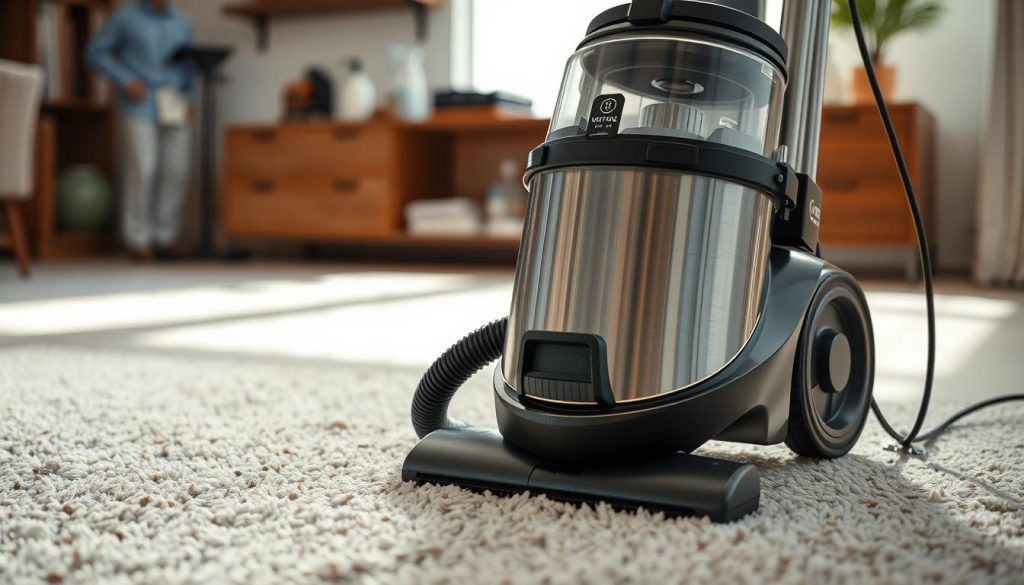
- Overall best — Tineco Floor One Switch S7 Stretch: iLoop sensor, dual-side brush, clean 1,000ml / dirty 720ml, 22,000 Pa, 50 mins washer / 70 mins vacuum, 4.7kg.
- Best for pet hair — Bissell CrossWave X7 Cordless Pet Pro: Turbo Pet mode, clean 820ml / dirty 420ml, up to 20,000 Pa, 30 minutes runtime.
- Best budget — Simplus Cordless Wet‑Dry Vacuum Cleaner: 21,000 Pa, 50 minutes, 500/550ml tanks, 4.4kg, flat-folding design.
- Most manoeuvrable — Narwal S20 Pro: hot water support, 20,000 Pa, 60 minutes, 790/720ml, 4.27kg, AI Dirt Sense.
How to read the specs: longer minutes matter if you clean whole flats in one session. Larger tanks reduce refills when mopping. Suction and power figures show pickup strength but real performance depends on rollers and flow control.
“Compare runtime, tank capacity and real features to match your layout and chores.”
| Model | Runtime (mins) | Clean / Dirty (ml) | Key feature |
|---|---|---|---|
| Tineco Floor One Switch S7 Stretch | 50 / 70 | 1000 / 720 | iLoop sensor, dual-side brush |
| Bissell CrossWave X7 Cordless Pet Pro | 30 | 820 / 420 | Turbo Pet mode for hair |
| Simplus Cordless Wet‑Dry | 50 | 500 / 550 | Flat-folding, great value |
| Narwal S20 Pro | 60 | 790 / 720 | Hot water, AI Dirt Sense |
Buying reality: price and promotions in Singapore shift quickly. We recommend checking current deals before deciding. For most homes, the Tineco model balances features and real cleaning results, Bissell suits pet owners despite shorter runtime, Simplus wins on value, and Narwal is best for tight layouts that need agile handling.
carpet cleaner wet and dry vacuum picks for rugs, carpets, and hard floors
We set realistic expectations for mixed-floor homes. Many multi-mode units shine on hard floors but need careful use on rugs.
What to expect on soft pile versus hard floors
Hard floors tolerate active mopping and higher water flow. That delivers faster stain removal and fewer passes.
Rugs need gentler water control to avoid overwetting and long drying times in Singapore’s humidity. Check the roller design and adjustable flow before buying.
Cleaning solution, clean water use and residue control
Use manufacturer-approved cleaning solution at recommended dilution to avoid streaks and sticky build-up. Too much detergent attracts dirt.
Large clean water tanks cut refill stops but add weight. We balance tank size with manoeuvrability when testing.
Edge and corner cleaning for skirting lines
Skirting lines and tight corners need narrow heads and angled brush reach. Pre-pick dry debris to improve wet passes.
“Pre-vac first, then a controlled wet pass gives the best results on mixed floors.”
| Surface | What to check | Practical tip |
|---|---|---|
| Hard floors | Water flow, mopping mode, tank size | Higher flow for stubborn stains, finish with a light pass |
| Rugs & runners | Brush action, low water setting, drying time | Use minimal water and allow ventilation |
| Edges & corners | Head width, angled brush, crevice tool | Pre-clear debris, then spot-treat |
Tineco Floor One Switch S7 Stretch: premium multi-surface performance
The Tineco S7 Stretch pairs smart sensing with strong suction to reduce guesswork during routine cleaning. Its iLoop sensor auto-adjusts suction power and water flow so we use less solution on light grime and more on stubborn dirt.
Smart iLoop sensor: auto-adjusting suction power and water flow
iLoop reacts to debris levels in real time. That means fewer passes, less over-wetting and more efficient minutes per charge.
Dual-side brush roller for near-wall cleaning
The dual-side brush reaches within ~0.5cm of skirting lines. Crumbs and edge dust are less likely to be left behind.
Runtime and tank sizes for longer sessions
With a 1,000ml clean water tank and 720ml dirty tank, the model suits bigger flats. Expect about 50 minutes as a floor washer and 70 minutes in dry mode. Charge time is roughly 4.5 hours.
Who we think it’s best for in Singapore homes
We recommend this product for households that want a smarter, mostly hands-off system for mixed floors. Storage, regular tank emptying and roller care remain necessary to keep performance and hygiene high.
“Smart sensing plus roomy tanks make the S7 Stretch a strong choice for multi-room cleaning.”
Bissell CrossWave X7 Cordless Pet Pro: built for pet hair and stubborn stains
For homes with active pets, targeted features make the difference between a quick touch-up and a long, frustrating clean.
We favour the CrossWave X7 as our pet-focused pick because its Turbo Pet mode pairs stronger suction with a purpose-made cleaning solution. That combo helps lift hair, tracked-in dirt and common stains in fewer passes.
Turbo Pet mode and enhanced cleaning solution for messes
Turbo Pet boosts suction to the model’s peak (up to 20,000 Pa) and increases brush action for stubborn marks. Using the correct solution avoids residue and reduces repeat passes.
Hard floors and rugs: how it tackles hair, dirt, and dry messes
The head handles mixed debris — dry crumbs plus damp paw prints — in one run on hard floors. For rugs we recommend minimal solution and light passes to prevent long drying times.
Tank capacity and runtime trade-offs to note
The clean tank holds 820ml while the dirty side is 420ml. Runtime is about 30 minutes, weight 4.8kg and charge time ~4 hours.
“Great for spot work and multi-pet homes, but expect more stops on larger flats.”
| Feature | Spec | Practical note |
|---|---|---|
| Clean / Dirty tanks | 820ml / 420ml | Good for spot cleans; refill often in bigger homes |
| Runtime | 30 minutes | Sufficient for quick sessions; not whole-flat cleaning |
| Suction | Up to 20,000 Pa | Strong for hair and set-in stains |
| Weight | 4.8kg | Manageable but not the lightest cordless product |
Who should prioritise this model: multi-pet households and anyone needing focused spot cleaning. We advise pre-clearing large hair clumps, wiping the brush path regularly, and avoiding over-wetting rugs to speed drying.
Simplus Cordless Wet-Dry Vacuum Cleaner: strong value for everyday spills
The Simplus model targets buyers who want solid performance without high price tags. We find it offers headline suction and a compact layout that suits typical HDB and condo routines.
Suction power and battery life for routine cleaning
The unit delivers 21,000 Pa of suction, which is strong for the price. That power lifts dirt and light debris from hard floors with fewer passes.
Maximum runtime is 50 minutes, and a full charge takes about 4.5 hours. In practice, this suits shorter, frequent cleaning sessions across smaller flats.
Flat‑folding design and brush head reach for tight spaces
Its 180° flat‑folding design helps reach under low furniture without awkward lifting. The 6.5cm brush head reaches skirting lines and around chair legs more easily than wider heads.
Tank sizes are a practical compromise: a 500ml clean tank and 550ml dirty tank handle everyday spills, but you may need refills for whole‑home wet cleaning in one go.
“Strong suction for the price, plus a space‑saving design — ideal for first‑time buyers and smaller homes.”
| Spec | Value | Practical note |
|---|---|---|
| Suction | 21,000 Pa | Good pickup for floors and tracked‑in debris |
| Runtime / Charge | 50 minutes / 4.5 hours | Enough for regular touch‑ups in compact homes |
| Tanks | 500ml clean / 550ml dirty | Adequate for spots; refill for whole‑home wet passes |
Narwal S20 Pro: lightweight, highly manoeuvrable, and hot water mopping
We find the Narwal S20 Pro excels where handling matters most. Its modest weight (4.27kg) and flat‑folding design make frequent sessions less tiring in typical Singapore flats.
AI Dirt Sense and multi-mode cleaning for different floors
AI Dirt Sense reads grime levels and adjusts intensity automatically. That saves water and cuts repeat passes on light messes.
The system offers five modes so we match settings to each surface. Use a gentle mode on wooden floor panels and a higher setting for tiled kitchens. The S20 Pro is also a solid cordless option when you need quick spot work.
Triple-sided edge cleaning for corners and along walls
The triple-sided head reaches corners and skirting lines better than many rivals. In practice, this reduces build-up of dirt along walls and saves extra hand tools.
Hot water support: when it helps with stains and oily spills
Hot water mopping is a practical feature for oily spills and stubborn stains near dining areas. It loosens residue so brushes and suction remove debris more effectively.
With a 790ml clean tank, 720ml dirty tank, 20,000 Pa suction and up to 60 minutes runtime, the S20 Pro balances run time with manoeuvrability. Charge time is about 3.5 hours, which makes quick turnarounds feasible for regular cleaning.
“For homes that prioritise ease of use and targeted performance, the S20 Pro’s smart sensing and edge reach are tangible benefits.”
| Spec | Value | Practical note |
|---|---|---|
| Clean / Dirty tanks | 790ml / 720ml | Good for whole‑flat sessions with few refills |
| Suction | 20,000 Pa | Strong pickup for mixed debris on hard floors |
| Runtime / Charge | 60 minutes / 3.5 hours | Long run time suits larger flats; quick recharge |
Dreame H15 Pro Heat: hot water cleaning power for stubborn stains
Homes that battle greasy kitchen spills will value machines that deliver sustained hot water at the brush head. The Dreame H15 Pro Heat positions itself as the stain‑breaker option for such work.
Continuous hot water channelled to the brush for oil spills
Continuous hot water means heat is delivered at the contact point rather than a brief warm-up. At 85°C hot water mopping loosens oil so the brush and suction remove residues more effectively.
Flat‑folding, auto‑traction wheels, and handling around furniture
The flat‑folding design and auto‑traction wheels reduce strain when working slowly over stains. We find this helpful when navigating furniture and doing deliberate passes on set‑in marks.
Considerations for wooden floors and overall weight
Practical trade-offs matter: runtime is 70 minutes in normal mode but drops to about 25 minutes in hot water mode. The unit weighs 6kg, so storage and handling suit buyers who accept bulk for power.
“Test a small patch first on wooden panels — high temperature can affect finishes.”
| Spec | Value | Practical note |
|---|---|---|
| Clean / Dirty tanks | 800ml / 650ml | Good capacity for targeted stain work |
| Suction | 22,000 Pa | Strong pickup for dirt and debris |
| Runtime (normal / hot) | 70 mins / 25 mins | Plan sessions around reduced minutes in hot mode |
| Weight & design | 6kg, flat‑folding, auto‑traction | Easy around furniture; heavier to store |
Shark HydroVac: antimicrobial brush roll for odour and bacteria control
Shark’s HydroVac focuses on hygiene at the brush head, a practical step for frequent spot work in compact flats. Its antimicrobial brush rollers aim to slow bacterial build-up and cut post-clean odours in humid climates.
Why antimicrobial brush rollers matter in humid climates
Humid Singapore homes let microbes grow faster on damp fibres and residues. Antimicrobial material reduces that risk at the source.
We still recommend rinsing the roller after use and using a self-cleaning system if your variant has one. Treated rollers help, but routine care preserves long-term performance.
Best-fit use cases: quick cleans, mixed debris, and smaller tanks
The HydroVac WD210SM suits quick daily passes around dining areas and entranceways. Its 500ml clean water and 360ml dirty tanks mean lighter handling but more frequent emptying.
With 2,700 Pa suction, 3.9kg weight and up to 30 minutes runtime, it is ideal for short sessions that pick up hair, dust and mixed debris on hard floors.
| Spec | Value | Practical note |
|---|---|---|
| Clean / Dirty tanks | 500ml / 360ml | Good for spot work; refill often |
| Suction | 2,700 Pa | Fine for daily messes, not marathon jobs |
| Runtime | 30 minutes | Suits small homes and quick passes |
“For users who value hygiene and light handling over raw power, the HydroVac is a sensible choice.”
Dyson wet and dry vacuum options in Singapore: what you’re paying for
If you prioritise lightweight handling and advanced filtration, Dyson options merit a close look. We outline three local models and explain the trade-offs between runtime, feel and price.
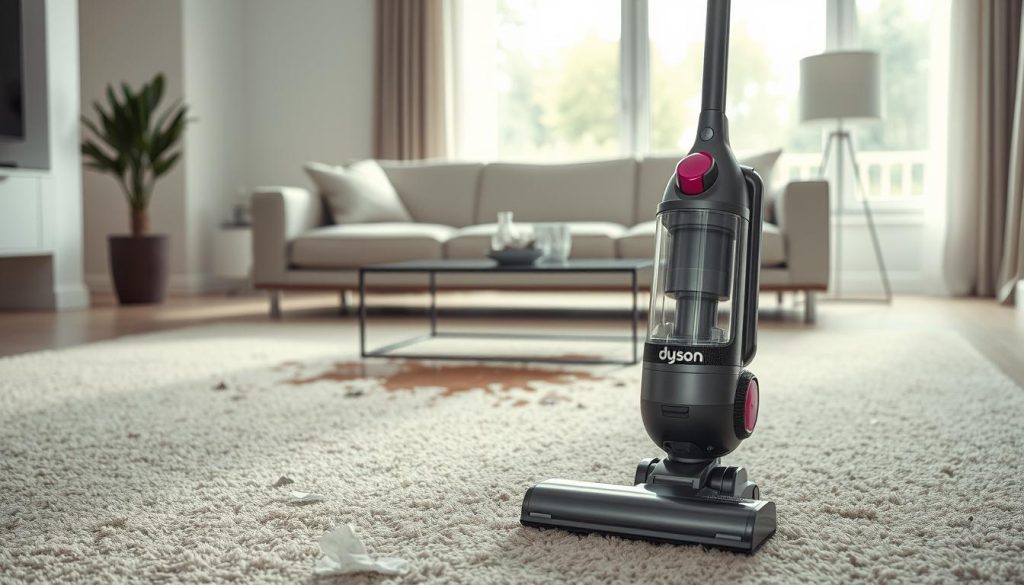
Dyson V12s Origin Submarine: lightweight, versatile, strong filtration
The V12s Origin Submarine is compact at 2.2kg with 130 Air Watts of power. Its tanks hold 300ml (clean) and 360ml (dirty). Expect up to 60 minutes of runtime and a 3.5 hour charge.
Who it suits: users who want a light, easy-to-handle model for quick deep cleaning sessions around the home.
Dyson V12s Detect Slim Submarine: HEPA filter and Fluffy Optic head
The Detect Slim boosts to 140 Air Watts and adds a HEPA-grade filter with a Fluffy Optic head that highlights fine dust. It weighs about 3.1kg and shares the same tank sizes and up to 60 minutes of runtime.
Why it stands out: improved filtration for allergy concerns and a head that helps find hidden dust during cleaning.
Dyson Digital Slim Submarine: slim design with shorter runtime
The Digital Slim trades bulk for a sleeker form and shorter runtime — roughly 40 minutes. It is a sensible pick for smaller flats and fast touch-ups where portability matters more than long sessions.
Why Dyson costs more: R&D, cyclonic suction, and premium build
Price reflects investment: Dyson’s higher price covers research, cyclonic airflow engineering and refined materials. That shows in consistent suction, quieter flow and durable finishes.
To compare power across brands, note Air Watts measures delivered cleaning force at the tool, while Pa (pascals) describes raw suction at source. Use both figures but judge real-world pickup and runtime first.
“Pair a Dyson with a robot vacuum for daily dust. The robot handles routine rounds; Dyson remains the hands-on deep cleaner for spots and tougher messes.”
Electrolux wet and dry vacuums: drum vs cordless stick, and who each suits
Choosing between a drum model and a cordless stick often comes down to job scale and storage in Singapore flats. We explain which Electrolux format fits common household needs and trade-offs for each design.
Drum models for heavy-duty cleanups
Drum units suit garages, workshops and renovation mess because they offer corded power, large tanks and robust attachments. Their 360° manoeuvrability and blower modes handle large debris and long sessions without battery limits.
Cordless stick models for daily vacuuming and mopping of hard floors
Cordless sticks are ideal for quick deployment, easy storage and regular mopping of hard floors. Advanced inverter motors, TriAction nozzles and smart dirt detection let us switch intensity for efficient passes.
Feature highlights and hygiene
Look for a self-cleaning system, microfilter technology and antibacterial water tanks on select models. These reduce maintenance, control odour and protect internal parts in humid climates.
Price expectations in Singapore
Prices vary widely by model and configuration. Promotions (up to ~47%), free delivery or 0% instalments can shift value significantly. If you already use a robot for daily dust, an Electrolux system covers the wet work and heavier tasks.
Conclusion
To finish, we boil down the key buying steps so Singapore buyers can match features to floor plans.
Choose by floors, lifestyle and tolerance for weight, noise; prioritise tank separation for clean water versus dirty, suction and filter type, and whether a reliable self-cleaning system is present.
Our headline picks remain useful: a premium multi-surface product for mixed rooms, a pet-focused model for hair and stains, a value option for compact flats, and a manoeuvrable choice for tight layouts.
Final tip: favour edge reach and fast drying where frequent rain or heavy foot traffic exists. Compare current price, bundles and warranty before you buy. With routine rinsing, roller care and sensible solution use, performance lasts longer; pair a robot vacuum for daily dust with a wet dry unit for spills and deeper cleaning.

