
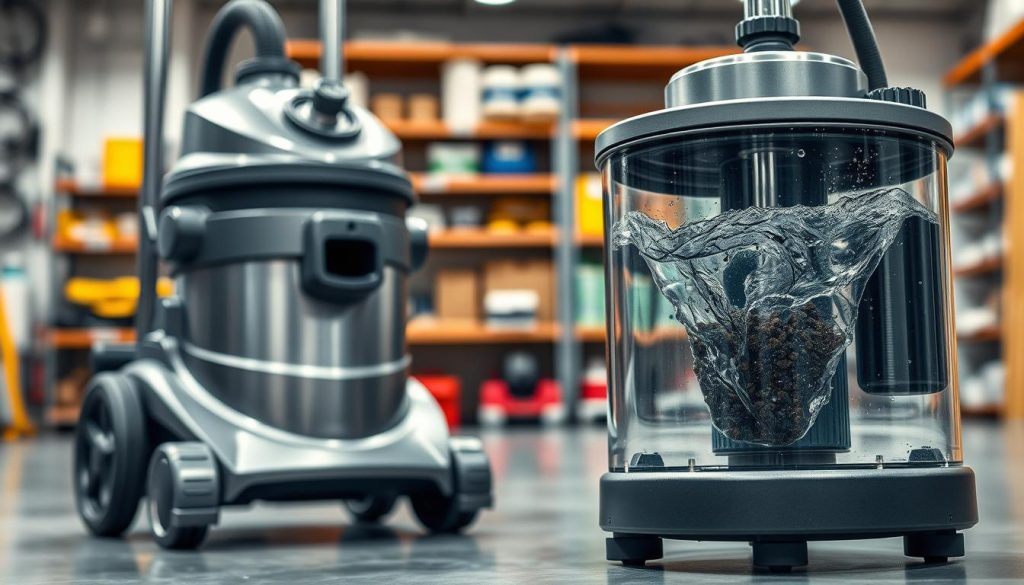
We introduce our professional wet and dry vacuum cleaner as a commercial-grade solution for sites across Singapore. We design the machine to handle dry debris, damp residues and liquid spills without swapping units.
Facilities teams will notice faster clear-ups and less downtime when using robust vacuum cleaners with proper filtration. This improves indoor air quality by cutting airborne dust during routine cleaning.
Expect strong suction, steady performance across long shifts and parts built for demanding sites. We set out the key specs buyers check: dust risk class, filter type, container size and whether filter cleaning is automatic or semi-automatic.
Use this page as a buying resource for contractors and operations teams who need dependable machines. We will match machine class to workload, from fine dust and mixed debris to large liquid volumes and hazardous material.
Professional wet & dry cleaning for commercial sites in Singapore
For busy commercial sites in Singapore, a single robust machine must cope with both spills and heavy dust. We design solutions that meet on-site needs without forcing teams to swap equipment mid-shift.
Why wet dry vacuums outperform standard dry vacuum cleaners
Wet dry vacuums handle liquids plus coarse and fine debris. Typical dry vacuum cleaners excel at dust but fail when liquid appears. A combined unit widens the contamination range and prevents cross-contamination risks.
What we mean by “professional” for daily, demanding use
By professional we mean machines built for daily, high-load tasks. Expect tough housings, durable rollers and power components that tolerate long shifts.
- One unit reduces storage and speeds incident response.
- Robust design meets site requirements for workshops, fit-outs, corridors and loading bays.
- Controlling fine dust protects workforce health around construction activities.
How our wet dry vacuum handles every type of dirt
Our machines adapt airflow and nozzle choice so one unit copes with solids, residues and spill recovery in a single workflow. This reduces task time on tiled lobbies, workshops and renovation sites in Singapore.
Dry, damp and liquid pick-up in one unit
Wet dry models can run purely for liquid recovery or as a dry tool for routine sweeping. For thin spills we use high-flow suction; for slurry-like fluids we recommend slower intake and the shut-off float to protect the motor.
From coarse dirt to fine dust: matching suction to the task
We classify debris as coarse dirt, medium residues and fine dust. Coarse grit needs wide nozzles and steady airflow. Fine dust requires tighter seals, finer filters and managed suction to avoid re-entrainment.
- Choose the right filter for dusty sites to keep filtration and separation working well.
- Adjust suction power to avoid leaving damp trails or scattering material.
- Use bagless collection for heavy wet loads; switch to bags for hygiene-sensitive dust.
For further reading on versatile use see our guide to the wet dry vacuum benefits and creative applications in this four-use roundup.
High suction power that stays consistent throughout the day
Consistent suction across a full shift is what separates reliable site kit from items that only look good on spec sheets.
NT models with the patented Tact system keep high suction power even when teams tackle large quantities of fine dust. Filters load during work, airflow drops and productivity falls unless the system fights clogging.
We see the difference on real tasks in construction: sanding dust, drilling residues, sawing chips and end-of-shift floor clearing. A steady suction power means fewer repeat passes and faster turnaround.
Our machines are engineered for uninterrupted use. Automatic pulses clear filter surfaces so crews continue without frequent manual maintenance. The result is sustained high suction and stable airflow across the working day.
| Typical issue | Effect on suction | Tact response |
|---|---|---|
| Filter loading from fine dust | Airflow reduces; pick-up drops | Automatic air pulses clear media |
| Coarse debris build-up | Nozzle clogging; slower work | Stable power keeps intake steady |
| Long shifts on site | Frequent stops for cleaning | Uninterrupted run time; fewer breaks |
Keeping suction high lowers labour hours and reduces interruptions on tight construction timelines. Next we explain how filter cleaning systems make this consistent performance possible and where vacuums meet real site demands.
Filter cleaning systems that protect performance and reduce downtime
Keeping filters clear is the single best way to reduce downtime and maintain constant suction power. We design systems that clear the filter without stopping work. That saves time and avoids frequent service visits.
Tact: triggered air cleaning technology for automatic cleaning
Tact reverses airflow to blast from the clean side through the media. Short, powerful pulses dislodge trapped dust so airflow stays stable. On L-class machines users can choose interval stages (for example 60s at MIN and 15s at MAX).
Semi-automatic filter cleaning for controlled intervals
Ap-class units use a semi-automatic routine. Press the button three times to trigger controlled pulses. This method is simple and reduces operator contact with dirt during service.
Why integrated cleaning saves time and running costs
Automatic and semi-automatic cleaning keeps suction power steady by preventing build-up that chokes airflow. The benefits are clear:
- No filter removal during routine cleaning.
- Less inhalation exposure to dust.
- Fewer mechanical shocks than manual knocking.
- Lower operating costs from reduced consumable use.
Working without bags: when it’s possible and why it matters
Where site rules allow, bagless operation uses the full container volume and cuts consumable spending. This reduces emptying cycles and overall running costs.
“The right filter system keeps a machine working harder for longer and reduces interruption on busy sites.”
| Feature | Behaviour | Benefit |
|---|---|---|
| Tact automatic | Reverse airflow pulses; auto or selectable intervals | Consistent suction; less manual service |
| M/H sensor-led | Differential pressure sets 7/15/60s or none | Adaptive cleaning for heavy fine dust |
| Ap semi-auto | User triggers with three presses | Controlled cleaning; reduced operator contact |
| Bagless mode | Full container use where permitted | Lower consumable costs; fewer stops |
Important: Do not use bagless setups for hazardous dust that require sealed disposal and safety filter sets. Choose the correct system for your site to keep teams safe in Singapore.
Professional wet and dry vacuum cleaner options by class and workload
A clear product range lets buyers map site tasks to the machine that will do them fastest and safest.
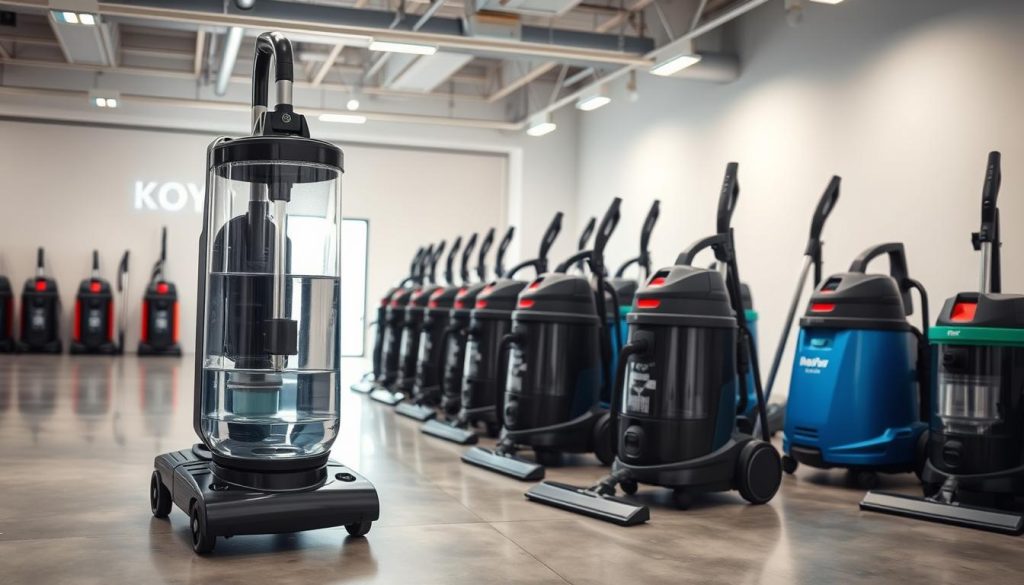
NT Tact: high-duty for fine dust
NT Tact machines suit heavy fine dust in industrial or trade settings. The self-cleaning filter keeps suction steady during long shifts. Choose this product where uninterrupted throughput and minimal manual service matter most.
Ap class: versatile all-rounders
The Ap class is a true wet dry all-rounder. It handles liquids, moist residues and medium-fine dust. Semi-automatic filter cleaning gives teams control without frequent stops.
Standard class: coarse dirt and large liquids
Standard machines focus on coarse dirt and large liquid volumes. They are robust, simple to use daily and suit contract cleaners who need a reliable, low-maintenance product.
Safety vacuums for hazardous dust
Safety vacuum cleaners protect operators from respirable and hazardous dust such as asbestos. These machines meet specialist compliance needs and prioritise health protection.
“The right class lets you shortlist products by dust risk, wet/dry mix, capacity and accessories.”
- Start with dust risk, then decide liquids vs solids mix.
- Check container size and accessory fits before you pick a product.
- Match the range to workloads typical in Singapore: renovation, contracts or industrial sites.
Dust classes L, M and H: selecting the right system for your site
Choosing the correct dust class saves time, reduces risk and guides equipment selection for every site task.
L class: moderate-risk particulates
L class covers low-to-moderate hazards such as chalk and plaster. Permeation limits sit at ≤ 1.0% which allows routine clean-ups with standard filtration.
This class suits fit-outs and light refurbishment where the materials produce non-toxic debris.
M class: baseline for construction sites
M class is the minimum legally required level on many construction projects. Permeation is
Examples include concrete, brick, ceramics, paint dust and hardwood. Choose machines and filters that meet these requirements for safe, compliant work.
H class: hazardous and carcinogenic dusts
H class covers asbestos, lead and heavy metals. Permeation must be
For these materials we require certified containment, sealed filters and strict disposal procedures to protect teams and the environment.
ATEX Zone 22 options for explosive dust
Where explosive dust is present, select ATEX Zone 22 rated equipment. Explosion-proof options change the system choice and safe operating way.
- Identify materials and tasks on site.
- Determine the dust class needed from the hazards and requirements.
- Match machine, filter configuration and any ATEX needs.
- Train operators in safe handling and correct disposal.
In Singapore applications such as construction fit-outs, industrial maintenance and specialist remediation, matching class to materials is an essential procurement step.
Filter types and filtration performance for demanding environments
Filter choice governs uptime, hygiene and the real-world suction that teams rely on.
PTFE and PES for longer service life
PTFE and PES media resist moisture and biological rot. They are certified for M/L class use with about 99.9% separation, which keeps airflow stable on sites where damp residues appear.
These filters clog less, need fewer interruptions and extend component life. That gives better performance across long shifts in Singapore workplaces.
When HEPA-grade is required
High-risk materials demand HEPA-class solutions. A cleanable PTFE H filter offers certified H-class protection with 99.995% separation.
Use HEPA-grade media where hazardous or carcinogenic dust is present, or where strict hygiene is enforced, such as hospitals and certain industrial areas.
Paper filters and practical procurement
Paper filters are cost-effective for dry-only work. After any liquid pick-up they must be dried thoroughly before reuse to avoid rot and performance loss.
Choose media by dust class, switching frequency between wet and dry tasks, and expected dust load. Matching media to the workload reduces downtime and consumable costs.
Colour-coded selection for fast decisions
Colour coding simplifies choices on busy sites:
- Brown — wood and fibre;
- Red — HEPA/high-risk;
- Black — toughest debris;
- Blue — universal use;
- Green — dry, cost-effective.
“Selecting the right filter media is the fastest way to improve indoor air outcomes and reduce repeat work on busy Singapore sites.”
| Filter type | Key benefit | Best applications |
|---|---|---|
| PTFE / PES | Moisture resistant; stable airflow | Mixed wet / dry tasks; M/L dust |
| PTFE H (HEPA) | 99.995% separation; cleanable | Hazardous dust; H-class needs |
| Paper | Low cost; high initial efficiency | Dry-only areas; short bursts |
In summary: match filters to dust class and site requirements to protect teams, cut downtime and secure cleaner indoor air in healthcare, hospitality and industrial settings across Singapore.
Wet pick-up safety: float systems and automatic cut-off
Safe liquid recovery starts with systems that stop flow before the motor can be harmed. We explain how machines move liquids and what protects the blower, the operator and the site.
How liquid transport and bypass blower work
The suction hose draws liquids and wet dirt into the container by a bypass blower. That blower carries the fluid safely away from the nozzle to the tank.
Stopping the airflow during overfill is essential. If liquid reaches the blower it can cause damage and downtime.
Mechanical float protection to prevent overfilling
A mechanical float rises with the liquid level. When full, the float physically blocks the suction channel and interrupts airflow.
This simple method prevents the blower from being flooded and reduces the chance of internal damage.
Electronic shut-off at safety limits
Some machines use conductive contacts inside the tank. When liquid reaches those contacts, the unit switches off automatically.
Electronic cut-off adds a second safety limit and reduces operator error during large spills.
Best practice: monitor fill level, use the correct nozzle for large volumes and plan safe disposal. For frequent high-volume recovery, we often recommend a standard class unit such as a dedicated wet pick-up unit to keep operations moving.
“Overfill protection reduces slip hazards on the floor, prevents motor failures and shortens downtime in busy sites.”
Dry vacuum cleaning performance: airflow, separation and cyclone effect
Airflow, separation and container design together define how well a unit handles fine dust on site.
How dust is filtered through flat pleated or cartridge filters
For dry dirt, a bypass blower creates the vacuum that moves material through the hose to the container. Heavy particles fall out first; remaining dust reaches flat pleated or cartridge filters for retention.
Flat pleated media offers a large surface area for steady airflow. Cartridge filters suit fine dust and often give better exhaust quality.
Reducing clogging to maintain suction power
Clogging reduces suction power and slows work on construction and workshop jobs. A blocked filter means lower pick-up and more passes.
Integrated semi-automatic or automatic filter cleaning briefly reverses airflow to dislodge dust without opening the unit. This keeps suction steady and limits operator exposure to dirt.
- Use the right filter for the task to prolong run time.
- Choose hoses and nozzles that match the debris size to avoid early loading.
- Rely on built-in cleaning cycles to sustain suction power and overall performance.
“Proper separation and timely filter cleaning preserve airflow and keep on-site work moving.”
Built for commercial cleaning: durability, chassis and manoeuvrability
Durability and manoeuvrability define the kit we recommend for heavy commercial use in Singapore.
Expect a strong chassis, impact-resistant panels and dependable parts that keep the machine in service across every busy day.
Robust components for reliable performance day in, day out
Strong frames and sealed joints protect seals and filters during frequent moves and transport. This preserves airflow and steady power.
High-quality motors and reinforced hose connections reduce failures and cut service visits. That reliability saves time on tight cleaning schedules.
Ergonomic handling to reach corners and work comfortably
We focus on balanced weight, low-profile nozzles and handles with natural bends to reduce fatigue on long shifts.
Good castors and a low centre of gravity help machines track well on the floor, turn in corridors and slip under furniture with minimal effort.
“A durable build keeps seals tight, suction consistent and tasks finishing faster.”
For commercial cleaners and in-house teams, these features mean predictable results, fewer interruptions and a faster daily routine.
Accessories and design details that speed up vacuum cleaning
Well-designed attachments save time, reduce rework and keep teams moving. We fit machines with practical extras to make each task faster on Singapore sites.
Wide floor nozzle with quick-change inserts
Wide floor nozzles cover more area with each pass. Quick-change inserts switch between liquid and solid pickup in seconds. This reduces downtime during mixed runs.
Tool connection and source extraction
Our tool sleeve has an airflow regulator and rubber adaptor for power tool capture. Connecting at source cuts secondary dust and improves site air quality.
Hose, cable and nozzle storage
Built-in storage bays hold the crevice nozzle, tool sleeve and spare hose. Flexible cable clips keep leads tidy. This lowers trip risk and prevents lost tools between jobs.
Heavy-duty castors for mobility
Large metal castors roll smoothly over rough floors and kerbs. They make transport across workshops and corridors effortless, saving time on every shift.
| Feature | Design detail | Benefit |
|---|---|---|
| Wide nozzle | Quick-change inserts | Faster floor coverage; quick wet/solid swap |
| Tool sleeve | Airflow regulator & rubber adaptor | Source extraction; cleaner air; controlled suction |
| Storage | Bayonet racks for nozzles, hose clips | Safer transport; fewer lost tools |
| Castors | Large sturdy metal wheels | Improved mobility on tough surfaces |
“Accessories shift a machine from a simple unit into a practical daily system.”
Industries we support across Singapore with commercial vacuum cleaners
Each industry in Singapore poses distinct cleaning challenges that our machines are configured to meet. We map capabilities to tasks so buyers match specs to daily reality.
Construction sites and workshops: fine dust control
Construction work produces high volumes of fine dust. We recommend source extraction, PTFE filters and M/H class options to keep air clean and meet site rules. Automatic filter cleaning reduces stoppages on long shifts.
Hotels and restaurants: fast liquid recovery and daily upkeep
Hotels need fast response for spills and tidy public areas. Standard class machines with quick-change nozzles recover liquids swiftly and lower guest disruption. Compact units help with tight storerooms and back-of-house routines.
Hospitals and hygiene-sensitive facilities: filtration-led confidence
In hospitals we specify HEPA-grade media and sealed collection to meet hygiene standards. Filtration performance underpins trust and compliance in high-risk zones where airborne particles matter most.
Automotive service centres: mixed debris, dust and fluids
Automotive bays need versatile machines for grit, oil and dust. The Ap class suits this mix; it handles solids and fluids while offering easy accessory swaps for varied applications.
| Industry | Key need | Recommended class | Primary feature |
|---|---|---|---|
| Construction | Fine dust control | M / H options | PTFE filters; source extraction |
| Hotel & restaurant | Fast spill recovery | Standard class | Quick-change nozzles; compact size |
| Hospitals | Hygiene & compliance | H class | HEPA media; sealed disposal |
| Automotive | Mixed debris and fluids | Ap class | All-rounder; easy accessory swaps |
“We help teams standardise cleaning across multiple sites while keeping results consistent.”
Special applications and tailored solutions
Where speed, temperature or volume exceed normal use, our bespoke options bridge the gap.
We present special-purpose products when standard wet dry configurations cannot meet an operational requirement. These tailored offerings cover high-volume drainage, rapid response tasks and environments with elevated ambient heat.
Disposal pump solutions for high-volume liquid removal
Some of our vacuum cleaners include built-in disposal pumps to speed emptying and lower manual handling. These products push collected liquids out to drains or holding tanks, cutting downtime after major incidents.
We link pump-enabled machines to applications such as construction water removal, emergency response for fire brigades and large-site spill clearance. They handle large volumes of liquids with reliable flow and fewer stops.
- Faster drainage: continuous pump-out for long runs.
- Less manual emptying: reduces exposure and labour time.
- Use cases: flood response, site dewatering, emergency services.
Heat-resistant options for bakery environments
For bakeries we offer heat-resistant products built to tolerate high ambient temperatures and strict hygiene rules. Materials and seals resist heat and food residues to maintain uptime.
When we scope the right solution we consider liquid volume, temperature exposure, duty cycle and any specialist compliance. This ensures the selected range meets site requirements without compromise.
“Our tailored solutions reduce risk and protect assets compared with forcing a general-purpose unit into a specialist role.”
Choosing the right size, capacity and filtration configuration
Matching container size to task prevents frequent stops and improves daily throughput. We guide buyers in choosing sensible sizes so operations run smoothly in Singapore sites.
Compact machines suit storerooms, narrow corridors and plant rooms where access is tight. Small units reduce storage needs and are quicker to manoeuvre between jobs.
Larger containers are more cost-effective for expansive areas. They cut stop-start emptying and extend run time during long shifts.
Compact machines for tight spaces
Choose a small unit when frequent transport or cramped storage is an issue. A light machine keeps teams agile and reduces handling time.
Larger containers for expansive areas and longer run time
For lobbies or construction floors, bigger containers lower interruptions. This is especially true where bulky debris or long runs of work are common.
Matching filtration to hygiene standards and site requirements
Match filters and filtration setups to dust class and hygiene needs. HEPA or PTFE media suit high-risk zones; paper or universal media work in low-risk areas.
- Size decisions link to waste type: bulky debris, dense dust or frequent liquids.
- Balance performance with manoeuvrability — a larger machine helps only if teams can move it.
- Create a shortlist by combining sizes, dust class, filter media and expected duty cycle.
“Select capacity that matches site requirements to save time and reduce running costs.”
Service, support and product resources in Singapore
Ongoing uptime depends on planned maintenance, timely spare parts and accessible technical downloads. We back our machines with a local support model that reduces downtime and keeps suction stability where it matters most.
Our Singapore team holds common spare parts so you can replace filters, hoses and nozzles quickly. Keeping a small stock of consumables saves important time on busy shifts.
Spare parts, filters and maintenance planning
We advise inspection intervals based on duty cycle: daily visual checks, weekly filter condition tests and monthly service rounds for heavy use. Simple cleaning routines prolong filter life and cut stoppages.
Plan which spare parts to keep on hand: one set of filters per month of heavy use, two spare hoses and a nozzle kit. This approach lowers long-term costs and protects product performance.
Downloads: product specifications and documentation
Our online download area bundles product manuals, specifications and safety documentation for approvals and audits. Access to clear files helps EHS teams match dust class and filter compatibility correctly.
“Treat service as part of total cost of ownership: proactive upkeep saves time and keeps the whole range productive.”
Conclusion
Ultimately, the right machine bundles liquid pickup, fine dust control and robust filtration into one dependable workflow.
We recommend matching contamination type—dust, coarse debris or spills—to the correct class: NT Tact for heavy fine dust, Ap for mixed tasks, standard for large liquids and safety for hazardous particulates.
Strong, reliable performance depends on high suction power, automatic filter cleaning and practical accessories for rapid changeovers. Choose dust class (L, M, H or ATEX Zone 22) and filter media (PTFE/PES or HEPA-grade) to meet site requirements and risk assessments.
Shortlist by workload and dust class, then confirm filtration configuration and accessory fit. That approach gives faster spill response, better dust control on sites across Singapore and smoother daily operations.

