
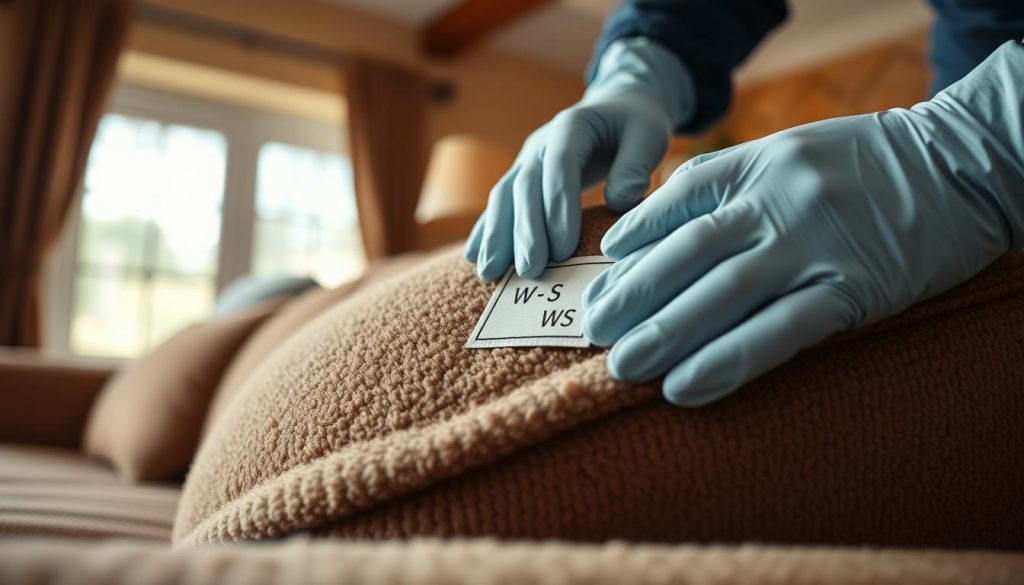
We set out what this machine is and who it suits in Singapore. Our aim is to help buyers choose a compact option that matches flat storage and allergy needs. We explain how it differs from traditional canister and cordless models.
We clarify the commercial decision factors up front: indoor air quality, allergy sensitivity, maintenance time, storage limits and running costs. These points shape our comparisons.
The promise of water-based filtration is that debris is trapped in a bath, which often yields fresher exhaust air and easier emptying. We preview the buyer checkpoints we will use: suction versus power draw, stages of filtration, ease of emptying and long-term upkeep.
Later we compare real examples, including Kärcher DS models and compact alternatives. For broader lab-tested context, see our picks for the best vacuums on Good Housekeeping by following the best vacuums guide.
Why choose a water-filter vacuum for homes in Singapore
Indoor air quality becomes a daily priority in air‑conditioned, high‑density homes. Cleaner exhaust helps when family members spend more time indoors and when rooms are sealed against heat and humidity.
Cleaner exhaust air for allergy‑prone households
The Kärcher DS series uses a rotating column that binds sucked‑in dust into a liquid bath. This design delivers exhaust that many users describe as noticeably fresher and far less dusty than standard appliances.
How water binding reduces dust clouds
When dust meets swirling liquid it becomes trapped rather than floating free. That means emptying creates little to no dust cloud — a genuine relief for people sensitive to pollen or dust‑mite residue.

Bagless convenience and practical expectations
A system that avoids disposable bags removes another source of stored allergens and ongoing cost. Many households prefer emptying and rinsing over handling dusty bags.
- Better room air after routine cleaning.
- No dusty bags to store or replace.
- Expect regular rinsing of the bath and intermediate parts.
“Swirling water binds dirt; no dust generated on emptying, and exhaust air can be up to 99.5% dust‑free.”
For routine home care and carpets, we also point readers to a practical guide on carpet maintenance learn how to clean carpet. Later sections will compare this approach against multi‑cyclone and cordless alternatives to match different budgets and storage needs.
bagless vacuum cleaner with water filter: how the filtration system works
Here we show how rapid rotation of a liquid core removes dust and stabilises suction during use.
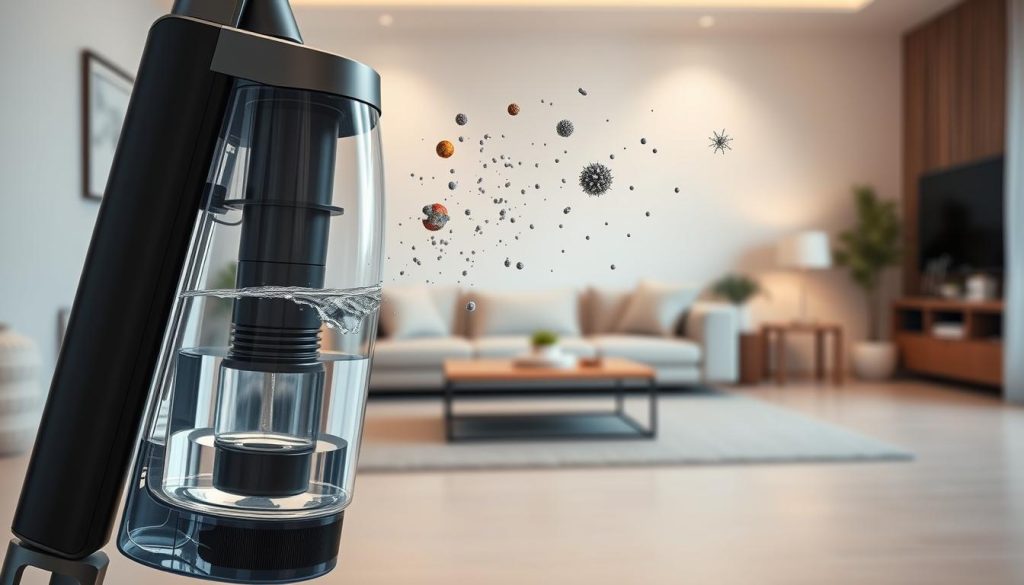
The rotating water column and how it traps dust and dirt
Strong suction drives an airstream into a high‑speed vortex. The rotating column acts as a wet trap, forcing dirt out of the airflow and into the bath.
Multi-stage filtration explained
Stage 1: a transparent capture stage holds coarse debris.
Stage 2: a washable intermediate cartridge collects finer moist particles and protects the motor.
Stage 3: a HEPA stage polishes the exhaust, removing the finest particulates.
What HEPA 12 and HEPA hygiene capture
HEPA 12 and hygiene grades trap pollen, fungal spores, bacteria and dust‑mite residue. In models such as the DS 5.800 and DS 6 these stages target particles ≥0.3 µm.
Interpreting “clean exhaust air” figures
Declared percentages (for example 99.5–99.99%) reflect lab tests. Real performance depends on routine rinsing, fresh water and intact seals.
- Look for: washable intermediate parts and clear stage separation.
- Expect: steadier suction when the system is maintained correctly.
“Captured debris is bound rather than dry, so emptying generates far less dust.”
What to look for when buying in Singapore
We focus on the trade-offs that matter: suction versus power draw, routine upkeep, ease of handling and compact storage suited to flats. This helps you pick a model that performs well and fits local space and noise expectations.
Suction power versus power consumption for everyday efficiency
Strong pick‑up is vital for crumbs and fine dust, but high power raises running costs and noise. Look for models marketed for high suction at low power—Kärcher DS 5.800 is an example of this balance.
Emptying, cleaning, and upkeep
For water‑based systems fill to the marked level, empty dirty water after each use and rinse components. Washable intermediate and HEPA stages extend life and keep output clean.
Comfort, storage and tools that matter
Choose telescopic tubes and ergonomic handles to reduce fatigue. Compact designs that park vertically and store accessories onboard save cupboard space.
- Floorheads: dry nozzles for hard floors, crevice tools for gaps and soft brushes for shelves.
- Hair handling: look for heads that resist tangling and easy‑to‑rinse parts.
- Noise: balance motor power against acceptable sound levels for close‑living homes.
“Aim for a device that blends strong pick‑up, sensible power use and simple upkeep.”
Model comparison highlights using current features on the market
Our aim here is to map real-world features to everyday use in Singapore flats. We focus on how ownership feels day-to-day rather than only headline numbers.
Kärcher DS 5.800 and DS 6: practical performance
DS 5.800 pairs a rotating column that binds dirt into a bath, a washable intermediate stage and HEPA 12. That gives strong suction while keeping power use modest.
DS 6 is easier to fill and rinse, offers cord rewind and vertical storage. Its HEPA 12 stage targets pollen, fungal spores and bacteria for fresher exhaust air.
How intermediate and HEPA stages help allergy-friendly cleaning
The liquid stage captures most coarse debris. Intermediate elements trap moist particles and protect the motor.
HEPA stages then polish the exhaust, cutting fine particulates linked to allergy discomfort.
Convenience, alternatives and practical choice
Fast rewind, stable parking and on-board storage matter when space is tight. For lighter upkeep, a compact multi-cyclone canister (VC 3) is quick to empty.
Cordless models (VC 4, VC 6) suit spot work and stairs, but check runtime and boost usage for larger rooms.
| Model | Runtime / Power | Hygiene & capture | Key conveniences |
|---|---|---|---|
| DS 5.800 | High suction, low power | Rotating bath + washable intermediate + HEPA 12 (99.99% exhaust) | Accessory storage, 2 parking positions, telescopic tube |
| DS 6 | Efficient motor | Removable bath + HEPA 12 (up to 99.5% dust-free) | Cord rewind, vertical storage, quick parking |
| VC 3 (multi-cyclone) | Compact, lower upkeep | Transparent container + HEPA hygiene | Crevice nozzle, dusting brush, parking position |
| VC 6 (cordless) | Up to 50 min / boost mode | Three-stage system incl. HEPA hygiene | LED nozzle, wall charger, battery display |
“Choose based on upkeep, noise and storage, not only peak power figures.”
Conclusion
To finish, we boil the choices down to what truly matters for daily home upkeep. Choose a vacuum cleaner when fresher exhaust air, low dust on emptying and a bag‑free approach suit an allergy‑aware household.
For long‑term satisfaction we require steady suction, a clear multi‑stage system and upkeep we can maintain weekly. Check power use, noise and how easy the device is to rinse and store.
Match size and storage to flat life and pick tools for dry floors, tight gaps and routine dirt. Interpret claimed clean‑air figures against real upkeep and correct use.
Quick buyer checklist: filtration stages, ease of emptying, comfort features, running costs. Learn more about practical benefits in our Sirena guide: Sirena benefits.

